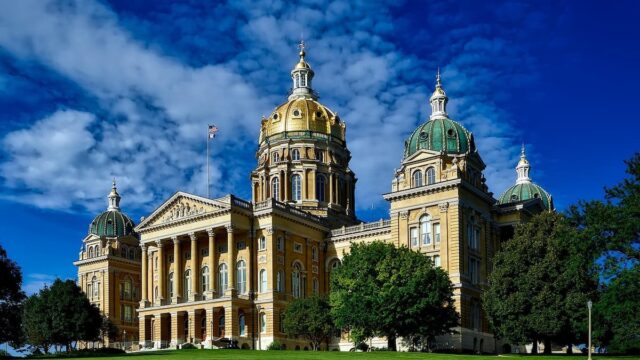
This week, Minnesota's new ban on prediction markets has led to a federal lawsuit, while governors in Louisiana and Iowa have enacted significant gambling legislation. Additionally, Tennessee is approaching a deadline for related bills.
Despite the conclusion of many legislative sessions across the United States, several important gambling bills were passed this week. Notably, Minnesota has enacted its first prediction market ban, alongside measures concerning sweepstakes in Louisiana and Iowa.
Minnesota's Prediction Market Ban and CFTC Lawsuit
Governor Tim Walz of Minnesota signed SF 4760, an extensive public safety bill that imposes stringent restrictions on prediction markets. This law criminalizes the creation, operation, or facilitation of prediction markets for business purposes, making it a felony to engage in such activities. It explicitly bans betting on various topics, including sports, elections, government actions, weather, wars, assassinations, and cultural events.
In response, the Commodity Futures Trading Commission (CFTC) swiftly filed a lawsuit against Minnesota, asserting that the new law disrupts its exclusive jurisdiction over federally regulated derivatives markets. The CFTC also contends that the legislation renders traditional event contracts related to weather and agriculture illegal, contracts that have been in use for many years.
With this ban, Minnesota has become the first state to impose such restrictions on prediction markets. However, the law's enforceability is already under scrutiny, as the state finds itself at the center of a growing conflict between federal and state authorities regarding prediction markets.
Louisiana's New Sweepstakes Measures
In Louisiana, Governor Jeff Landry has signed two bills related to sweepstakes: HB 53 and HB 883. The first bill categorizes certain gambling offenses, including those involving electronic sweepstakes devices, as predicate offenses under the state’s racketeering laws. This legislation is set to take effect on August 1, 2026.
The second bill, HB 883, modifies existing laws to include online and mobile games that simulate gambling and utilize dual-currency payment systems, allowing players to convert virtual currency into cash or prizes. Louisiana is now working to combine direct prohibitions on sweepstakes with enhanced criminal enforcement measures aimed at targeting sweepstakes casinos.
Iowa's Enforcement Against Illegal Sweepstakes
Iowa Governor Kim Reynolds has enacted SF 2289, a law that broadens the Iowa Racing and Gaming Commission's powers to pursue unlicensed gambling operators, specifically those involved in illegal sweepstakes. This law grants regulators clearer authority to issue cease-and-desist orders and seek legal action against unauthorized gambling activities.
While Iowa did not implement a direct ban on dual-currency sweepstakes, the new law equips regulators with stronger tools to combat platforms they consider to be engaging in illegal gambling.
Tennessee's Approaching Deadline
In Tennessee, Governor Bill Lee is facing a deadline to act on two bills: SB 2136, which addresses sweepstakes, and SB 1992, concerning prediction markets. SB 2136 aims to prohibit online sweepstakes games, defining them as games that use virtual currency to simulate gambling and allow players to redeem that currency for cash or prizes.
SB 1992 proposes to establish a Class E felony for those who influence the outcome of an event while having a financial stake in a related prediction market contract. Should Lee sign SB 2136 or let it become law without his signature, Tennessee would join a growing number of states implementing anti-sweepstakes legislation. Furthermore, if SB 1992 is enacted, Tennessee would be among the first states to introduce insider trading laws for prediction markets.
Federal Legislative Developments
On the federal front, Representative Ritchie Torres has introduced the Campaign Funds Integrity Act of 2026, which seeks to prevent candidates and political committees from using campaign funds to engage in gambling activities.