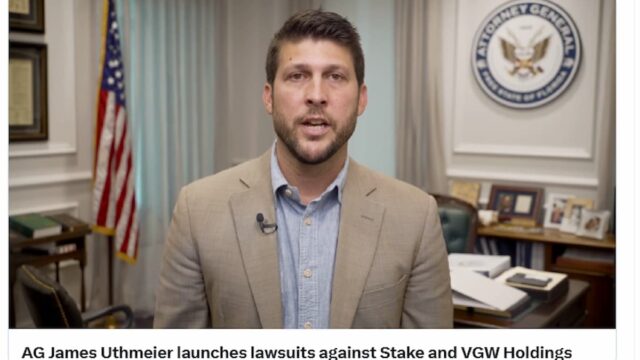
Florida Attorney General James Uthmeier has escalated legal actions against sweepstakes casino operators Stake and VGW, alongside various payment processors that support transactions on their platforms. This development represents a significant challenge for the sweepstakes industry, which is experiencing a decline in the U.S. market.
The two lawsuits, lodged in Hillsborough County Circuit Court, assert that Stake.us and VGW's Chumba Casino, LuckyLand Slots, LuckyLand Casino, and Global Poker are engaging in illegal online gambling activities as defined by Florida law.
In addition to the casino operators, the lawsuits target several payment companies, including Worldpay, Trustly, Praxis, and Breeze Labs, accusing them of facilitating transactions associated with these platforms.
Uthmeier emphasized, “These so-called ‘sweepstakes’ and ‘social casinos’ are illegal online gambling operations. If it resembles a casino, accepts real money, and pays out like one, it is indeed a casino—and it violates Florida law. These businesses have exploited Floridians, including minors and the elderly, through misleading marketing and round-the-clock access, while evading state licensing, tax obligations, and consumer protection laws. They need to be halted.”
The Attorney General is pursuing permanent injunctions to prevent these companies from operating or soliciting customers in Florida. He is also seeking the recovery of funds lost by Florida consumers, disgorgement, restitution, civil penalties under the Florida Deceptive and Unfair Trade Practices Act (FDUTPA), and attorneys’ fees.
This legal action also extends to payment processors, broadening the enforcement scope beyond just the operators of sweepstakes casinos. In the VGW case, several VGW entities are included alongside payment processors like Worldpay and Trustly. The Stake lawsuit identifies Sweepstakes Ltd., operating as Stake.us, along with payment-related defendants such as Trustly, Praxis, and Breeze Labs.
Florida contends that these companies facilitated transactions for gambling operations deemed illegal under state law. This approach positions payment processors as key players in the case, treating the flow of funds into these platforms as part of the alleged illegal gambling operations. Consequently, companies that process or facilitate these transactions may face liability, even if they do not directly operate the games.
This strategy of targeting payment processors could have significant ramifications, especially since many have substantial operations in the U.S. It may provide a more straightforward avenue to shut down sweepstakes casino platforms that function through offshore entities.