The opposition within the Las Vegas gaming industry has intensified as legal, congressional, and regulatory attention on the rapidly expanding sector increases.
During the Global Gaming Expo (G2E) on Tuesday, prediction markets were a focal point of discussion, with leading casino executives joining the American Gaming Association in expressing their concerns about the sector.
Outside of Las Vegas, both the courts and federal authorities are shifting their focus to prediction markets. Reports indicate that the U.S. Supreme Court is contemplating whether to review cases related to prediction markets, while a House committee is broadening its investigation into insider trading, and the Commodity Futures Trading Commission (CFTC) is preparing to take action regarding promotional practices.
The Main Discussion: Prediction Markets Take Center Stage at G2E
Following initial industry pushback on the first day of G2E, the second day saw continued debate surrounding prediction markets. Casino executives, regulators, Tribal gaming leaders, lawmakers, and other stakeholders engaged in discussions about sports event contracts, with much of the dialogue critical of the industry.
Bill Miller, President and CEO of the American Gaming Association, devoted a significant part of his keynote address to the topic, asserting that prediction markets are exploiting regulatory loopholes to evade state laws, taxes, and Tribal sovereignty. He also suggested that recent legal challenges indicate that the peak of their success may have passed.
MGM Resorts CEO Bill Hornbuckle revealed that the company had been approached to enter prediction markets but chose to decline due to regulatory and licensing concerns. Similarly, Caesars Entertainment CEO Tom Reeg cautioned that insufficient oversight could lead to detrimental outcomes that tarnish the reputation of the broader gaming industry.
Craig Billings, CEO of Wynn Resorts, took a more neutral approach, stating that the company has no vested interest in the matter, yet acknowledged that increased access to betting could ultimately benefit Las Vegas.
The criticism was not limited to casino executives. Mike Dreitzer, Chairman of the Nevada Gaming Control Board, joined MGM Resorts Chief Compliance Officer Stephen Martino, attorney Daniel Wallach, and AGA Vice President Tres York in a separate panel discussion on Tuesday that focused on oversight and compliance comparisons between traditional gaming and prediction markets.
Dreitzer expressed concerns regarding underage access and activities in states where sports betting remains illegal.
Another panel on Tuesday further expanded the opposition. UNITE HERE President Gwen Mills, Mashantucket Pequot Tribal Nation Chairman Rodney Butler, and Rep. Steven Horsford joined Miller for a discussion aimed at coordinating the gaming industry's response. This session united organized labor, Tribal gaming, and Congress around issues such as employment, Tribal sovereignty, and regulatory authority.
Supreme Court Reviews Prediction Market Cases
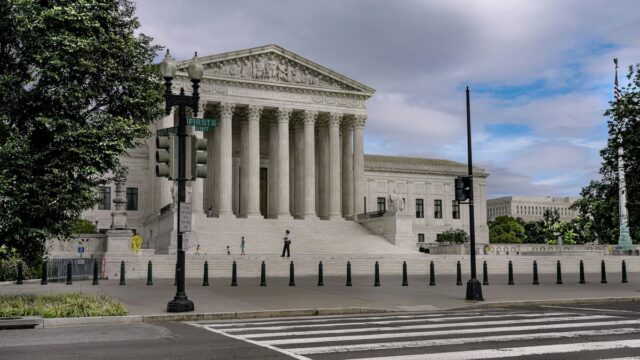
The Supreme Court may soon agree to hear one or more cases related to prediction markets as it evaluates several petitions concerning sports event contracts ahead of its 2026-27 term.
The New Jersey Division of Gaming Enforcement has petitioned the court following a favorable ruling for Kalshi from the Third Circuit. Concurrently, Robinhood and Crypto.com have filed petitions after the Ninth Circuit rejected their preemption arguments in Nevada.
While the court has yet to decide on any of these cases, prediction markets are among several significant issues being considered as justices prepare for the upcoming term.
House Expands Investigation into Prediction Market Insider Trading
The House Oversight Committee has broadened its inquiry into potential insider trading activities within prediction markets.
Committee Chair James Comer sent letters on Tuesday to Hyperliquid, Crypto.com, and Aristotle Exchange/PredictIt, requesting information regarding identity verification procedures and controls intended to detect and prevent trading based on nonpublic information.
The committee initiated its investigation into Kalshi and Polymarket in May and has since gathered nearly 1,000 documents and participated in five briefings, according to CNBC.
The CFTC is reportedly preparing to take action concerning promotional practices in prediction markets.