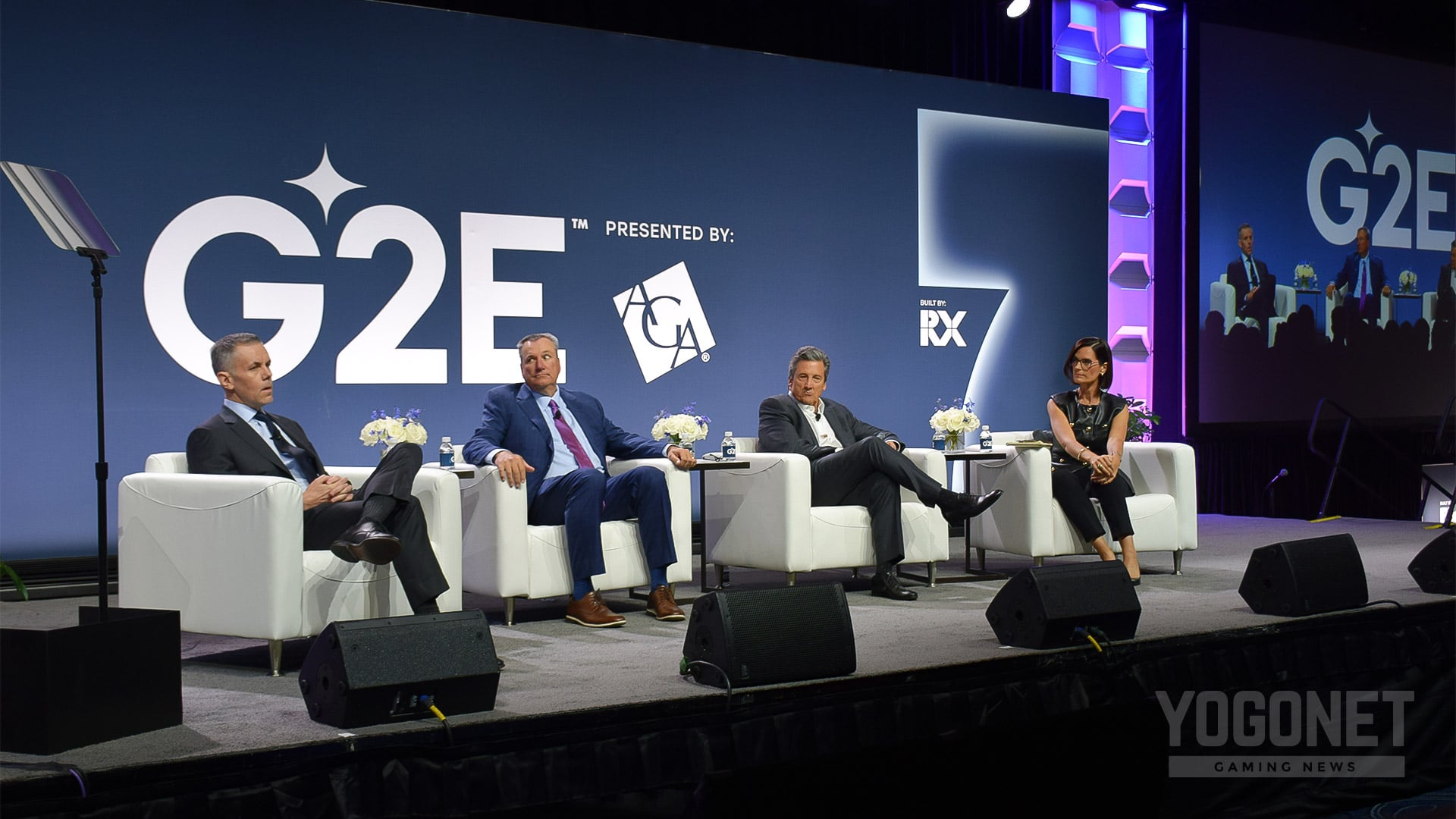
During the G2E 2026 event, key figures from the gaming sector addressed the evolving business environment, which is influenced by various factors including changes in Las Vegas tourism, significant international projects, mergers and acquisitions, stock market pressures, and rising tensions over prediction markets.
Among the speakers were Bill Hornbuckle, President and CEO of MGM Resorts International; Tom Reeg, CEO of Caesars Entertainment; and Craig Billings, CEO of Wynn Resorts. The session, titled “CEO Outlook: The Global State of Gaming,” was moderated by CNBC correspondent Contessa Brewer.
Executives noted a decline in visitor numbers, attributing this to increased airfare and reduced flight availability. However, they firmly stated that Las Vegas remains an attractive destination. Hornbuckle emphasized that while average hotel rates have risen, they still offer significant value compared to cities like New York and Los Angeles.
Reeg described the current slowdown as a return to typical seasonal trends following the surge in demand post-pandemic. He stated, “I think we're really back to where we were pre-pandemic.”
Importantly, the executives indicated that high-end resorts are not inclined to lower prices to boost occupancy. Luxury gaming, conventions, and upscale travel continue to perform well, despite challenges faced by more budget-conscious travelers.
The discussion shifted focus from mere visitor numbers to the quality of the clientele being attracted. Billings pointed out that in Macau, Wynn's strategy targets a specific customer demographic, making the overall visitor count less significant compared to the value and profile of their guests.
“We remain very, very focused on the mid- and long-term in Macau,” Billings remarked.
MGM's strategy mirrors this trend, as the company converts standard rooms into suites to enhance the value derived from casino patrons, rather than just relying on increased visitor numbers.
Both executives emphasized that short-term changes in Macau's traffic or gaming revenue do not significantly impact their confidence in the long-term viability of the market.
Outside of Macau, both MGM and Wynn are investing heavily in projects that will take years to yield returns. Wynn is progressing with its $5.7 billion Wynn Al Marjan Island project in the UAE, set to open in September 2027, while MGM is focused on its $10 billion integrated resort in Osaka, anticipated to launch in 2030.
Hornbuckle believes MGM's role as Japan's first integrated resort operator could give it a notable edge over competitors as more large-scale projects emerge. He stated, “If we don't have at least a five-year head start, I'd be absolutely shocked.”
These initiatives highlight a significant trend discussed by the CEOs: many of the most impactful decisions in the industry are now being made with investment timelines spanning years rather than quarters.
This theme became particularly evident when discussing mergers and acquisitions. Caesars is transitioning towards private ownership through a deal with Fertitta Entertainment, which Reeg believes will enable management to adopt a long-term outlook.
He noted, “We're forced as public companies to think in 90-day periods and that's not healthy … because that's not how you run a business.” Reeg argued that the quarterly reporting cycle can clash with the realities of managing large gaming and hospitality enterprises, where strategic investments and acquisitions often require a longer view.