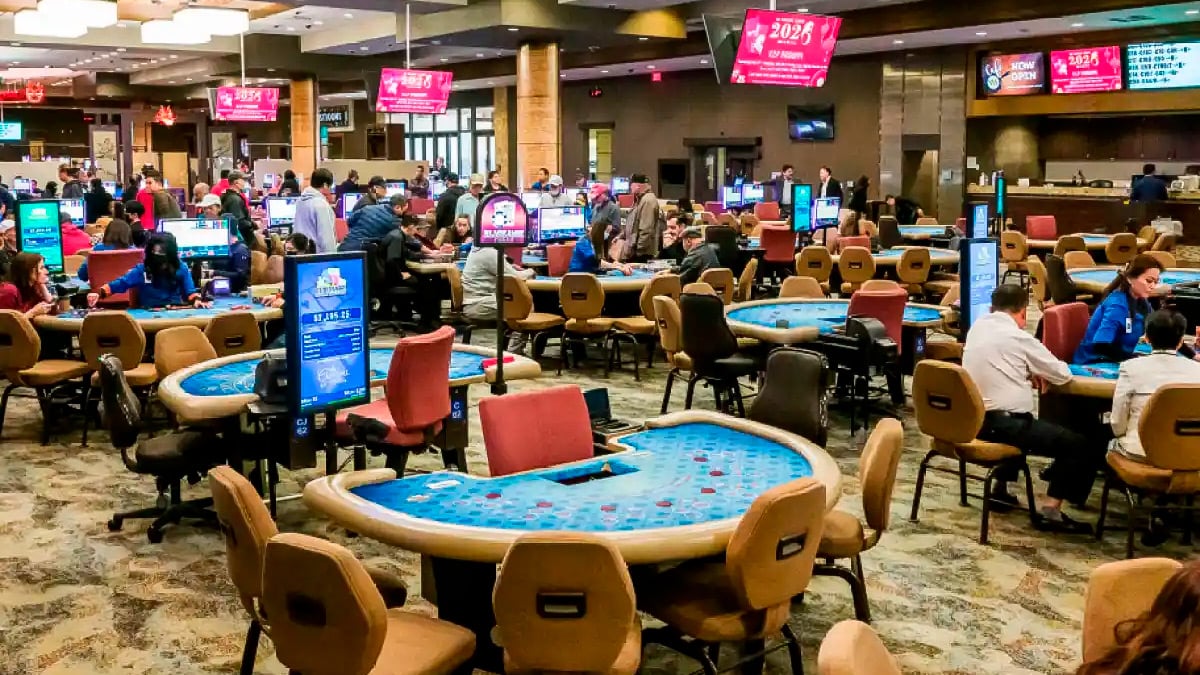
A judge from the San Francisco Superior Court has intervened to prevent the enforcement of California gaming regulations that would have prohibited blackjack-style games in state-licensed cardrooms. This decision allows these venues to continue offering such games while a legal dispute unfolds.
Judge Richard Darwin issued a preliminary injunction on Thursday, putting a hold on regulations proposed by Attorney General Rob Bonta’s Bureau of Gambling Control. The California Gaming Association, which initiated the legal challenge, argued that the bureau overstepped its authority by implementing rules that would effectively ban these games statewide.
The core issue revolves around the manner in which cardrooms conduct blackjack, baccarat, and pai gow poker. Unlike tribal casinos in California, which can offer “banked games” where players compete against the house, cardrooms operate under a model where players face off against each other, with third-party proposition players supporting the games.
The contested regulations aimed to dismantle the legal framework that permits this model. Earlier this year, cardrooms filed two lawsuits seeking to nullify these rules.
The California Gaming Association reported that the court found “clear and convincing evidence” that enforcing the regulations would cause irreparable damage to cardrooms and their surrounding communities.
Kyle Kirkland, the owner of Club One Casino in Fresno and president of the association, stated that the ruling validates their claim that the bureau attempted to alter state gaming laws. He accused the regulations of being influenced by “powerful tribal gaming interests” aiming to eliminate competition from cardrooms.
“Cardrooms have legally operated these games for decades. Our operations provide thousands of middle-class jobs and generate vital revenue for communities across California. Instead of safeguarding these communities, Attorney General Bonta chose to push forward regulations that jeopardize local economies, public safety funding, and the livelihoods of many Californians,” Kirkland commented.
Kirkland also noted that Club One contributes $1 million annually to Fresno’s tax revenue. The association mentioned that the Bureau of Gambling Control received over 1,700 public comments opposing the regulations before finalizing them with minimal amendments.
Under state law, tribal-owned casinos are permitted to offer banked games. A coalition of Native American tribes has contended that the use of third-party proposition players by cardrooms constitutes an illegal loophole, allowing privately owned gambling establishments to compete unfairly and diverting significant funds from tribal communities.
According to Bonta’s economic analysis, the proposed regulations could wipe out more than 50% of cardroom revenues across the state, endangering jobs and diminishing local tax income essential for services such as police, fire protection, parks, youth programs, and other municipal services.