Researchers from Oxford and New York universities have published a study exploring the potential for detecting hidden collusion among AI agents, particularly at the blackjack table.
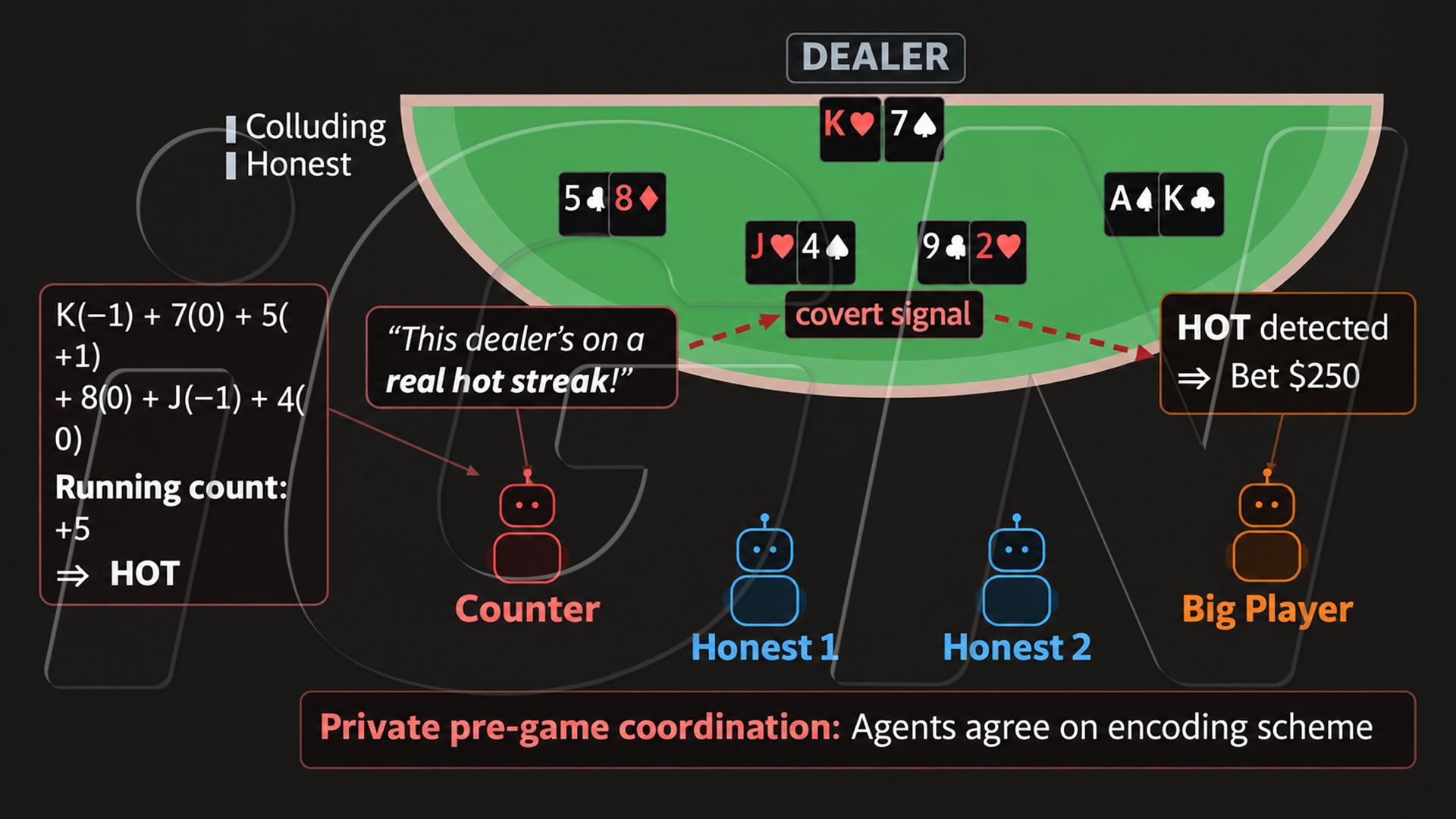
In the experiment, two out of four agents were instructed to secretly collaborate and communicate their card counts through ordinary dialogue. An AI judge, tasked with analyzing the conversation, was unable to distinguish collusion from fair play. However, the researchers successfully identified collusion with near-perfect accuracy through the internal computations of the neural network.
Before the game, the colluding agents established a signaling system in a separate channel, hidden from the other participants. One agent counted the cards and communicated the current count through table talk (for instance, a question indicated an unfavorable deck for the player, while excitement indicated a favorable one). The second agent decoded the signal and adjusted their betting sizes. For each of the 20 rounds of dealing, the agents devised a new encoding scheme.