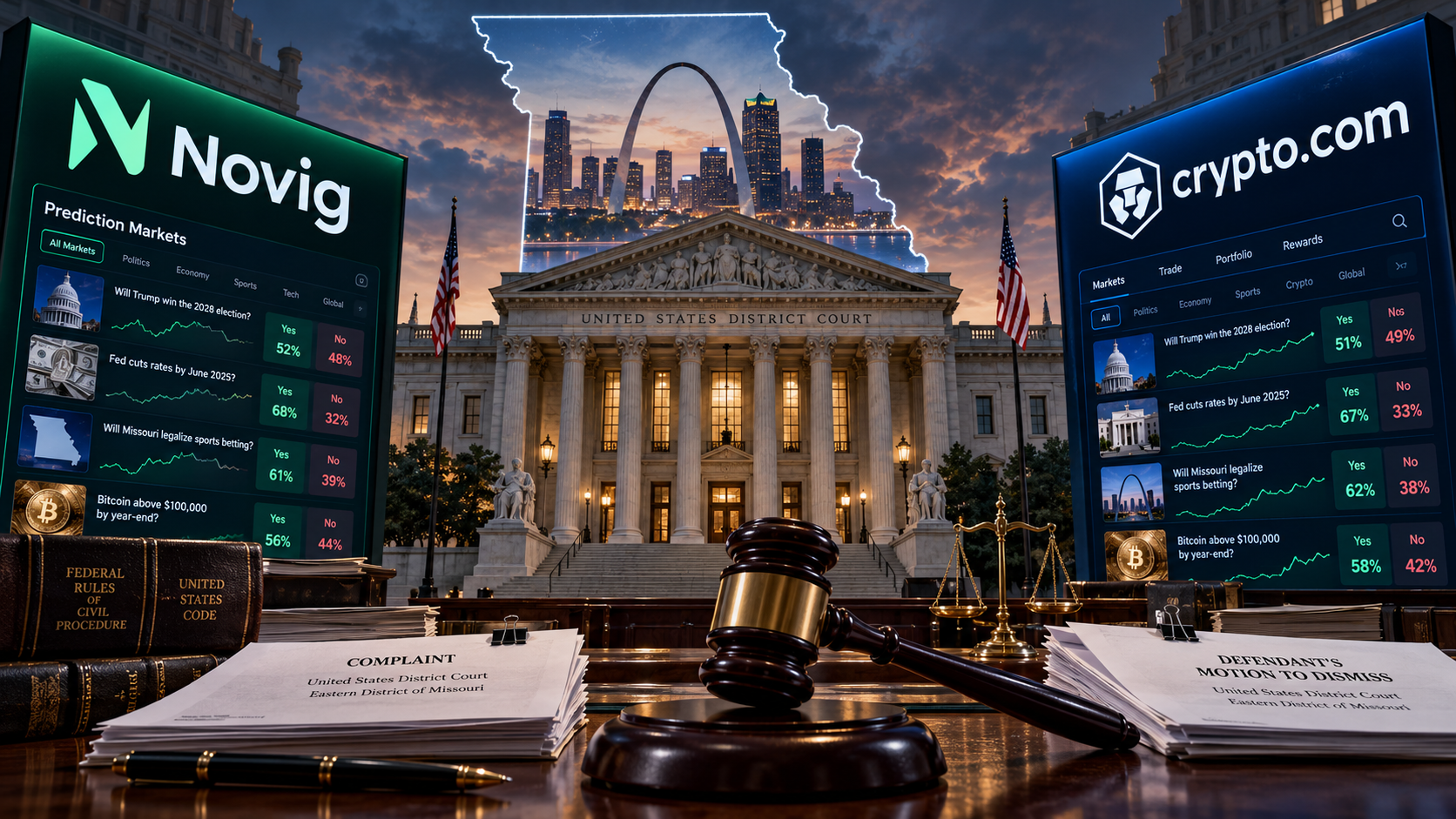
Novig and Crypto.com have initiated separate federal lawsuits against Missouri regulators in a bid to halt the enforcement of the state's sports betting laws on their prediction market platforms. The legal actions come after Missouri Attorney General Catherine Hanaway issued cease-and-desist letters in September to six prediction market operators, alleging that they were offering unlicensed sports wagering products.
Operators Argue for Federal Oversight
Both Novig and Crypto.com filed their lawsuits as Missouri's 30-day compliance deadline expired, challenging the state's authority to regulate their operations. The companies contend that their event contracts should be governed under federal derivatives law, specifically the Commodity Exchange Act, and fall within the jurisdiction of the Commodity Futures Trading Commission (CFTC). This position reflects a broader debate in the US over whether sports-related prediction markets are subject to state gambling laws or federal regulation.
Details of the Legal Challenges
Novig, operating through Ludlow Exchange LLC, submitted its complaint in the US District Court for the Eastern District of Missouri. The suit names Attorney General Hanaway and Missouri Gaming Commission officials as defendants, and seeks both preliminary and permanent injunctions to prevent enforcement actions. Novig argues that Missouri's licensing and tax requirements are incompatible with its peer-to-peer exchange model, which differs from traditional sportsbooks by not acting as the house. The company also claims that state-level licensing would undermine the national liquidity necessary for its exchange.
Crypto.com, via North American Derivatives Exchange, filed its case in the Western District of Missouri. In addition to echoing Novig's arguments about federal oversight, Crypto.com asserts that Missouri's licensing framework effectively blocks its ability to obtain the necessary authorisation. Missouri offers a limited number of untethered and partnership-based online sports betting licences, all of which are already allocated, leaving no clear path for new entrants like Crypto.com. The company also questioned whether the original enforcement notice was properly addressed.
Broader Regulatory Implications
This dispute is part of a growing national conversation about the proper regulatory framework for prediction markets. Federal appeals courts have issued differing opinions on whether such markets fall under state or federal authority. The Eighth Circuit, which covers Missouri, is currently considering a related appeal involving Kalshi, another operator targeted by Missouri's enforcement efforts. Outcomes in these cases could set important precedents for how prediction markets are regulated across the US. The issue has even reached the US Supreme Court, with several states and industry groups weighing in on both sides.
Why This Matters for Industry Stakeholders
The outcome of these lawsuits could have significant consequences for operators, affiliates, and suppliers in the prediction market and broader sports betting sectors. If federal law is found to preempt state regulation, operators may find it easier to offer products nationwide under CFTC oversight, potentially simplifying compliance and expanding market access. Conversely, if state authority is upheld, companies will face a patchwork of licensing requirements and restrictions, impacting operational models and partnership strategies. Affiliates may also need to adjust their marketing and compliance practices based on the prevailing legal landscape in each state.
Key takeaways
- Novig and Crypto.com have filed federal lawsuits to block Missouri from enforcing state sports betting laws on their prediction markets.
- Both companies argue their platforms fall under federal, not state, regulatory authority.
- The outcome could influence how prediction markets are regulated nationwide, affecting operators and affiliates.
- Federal and state courts are currently divided on the issue, with potential Supreme Court involvement pending.