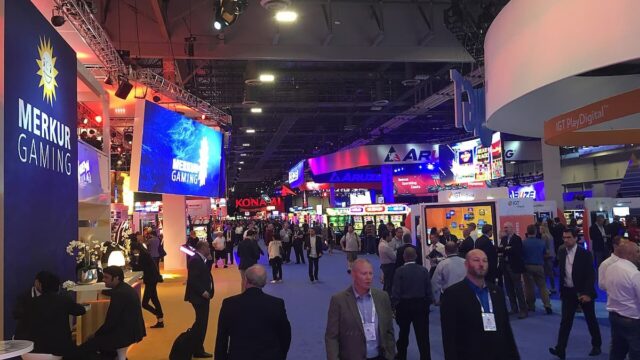
On Monday, the gambling sector faced new financial forecasts, regulatory challenges, and innovative sports-related products. The day was particularly notable for the industry's reaction to Brazil's recent online sports betting ban and the commencement of the Global Gaming Expo (G2E) in Las Vegas, where prediction markets quickly came under fire from regulators and industry leaders.
In Brazil, the abrupt halt to online sports betting and casino operations has led to varied responses from companies. Some have indicated potential significant financial repercussions, while others claim their exposure is minimal.
Flutter has announced the suspension of its Brazilian operations, projecting a revenue loss of around $70 million and a $20 million dip in adjusted EBITDA if the ban persists through the year.
Entain has maintained its EBITDA guidance for the year but anticipates results on the lower end of its projections. The company estimates that Brazil will contribute about 5% to its online net gaming revenue for the year, revising its growth expectations to 4%-6%.
Better Collective has adjusted its guidance for 2026 downward, halted its 2027-28 forecasts, and paused its share buyback program. Meanwhile, Allwyn reported that Kaizen Gaming, which operates Betano and in which Allwyn holds a 36.75% stake, is preparing to take legal action to safeguard its Brazilian license, with reports indicating Betano leads in market share in Brazil.
For suppliers, the situation appears more stable. Genius Sports has reaffirmed its 2026 guidance, noting it has minimal betting revenue exposure from Brazil and expects limited financial impact. The company also stated that its partnership with the Brazilian Football Confederation remains intact.
Kambi's CEO, Werner Becher, echoed these sentiments, indicating that Brazil represents a small fraction of Kambi’s revenue, with expectations of minimal financial consequences.
On September 25, President Luiz Inácio Lula da Silva enacted a provisional decree that took immediate effect, allowing users until October 5 to withdraw their funds. The Brazilian Congress must ratify this decree within 120 days for it to remain valid.
At G2E, the opening day sparked discussions around prediction markets, which faced significant pushback. A panel titled “Prediction Markets, Regulatory Oversight and Integrity” featured gaming representatives who expressed concerns that these markets circumvent state licensing and consumer protection laws.
Tres York, Vice President of Government Relations at the American Gaming Association, noted that 45 state attorneys general have publicly opposed prediction markets, with states winning 38 out of 43 related legal cases.
Joe Casole, Vice President of Legal and Regulatory Affairs at IC360, highlighted the similarities perceived by consumers between sportsbook and prediction market applications. West Virginia Delegate and Play’n Go’s government affairs executive, Shawn Fluharty, argued for maintaining state oversight over sports-related prediction markets, likening them to unregulated moonshine versus well-regulated sports betting.
The topic continued to be a focal point on Tuesday, with panels discussing “A United Front: Confronting Prediction Markets” and “From Casino Floors to Prediction Markets: Comparing Compliance, Oversight, and Risk.”
Additionally, IGT introduced a new brand identity at G2E, representing the merger of its Gaming & Digital division with Everi. The company emphasized that this new identity focuses on integrated casino solutions, popular games, operational expertise, and customer success.