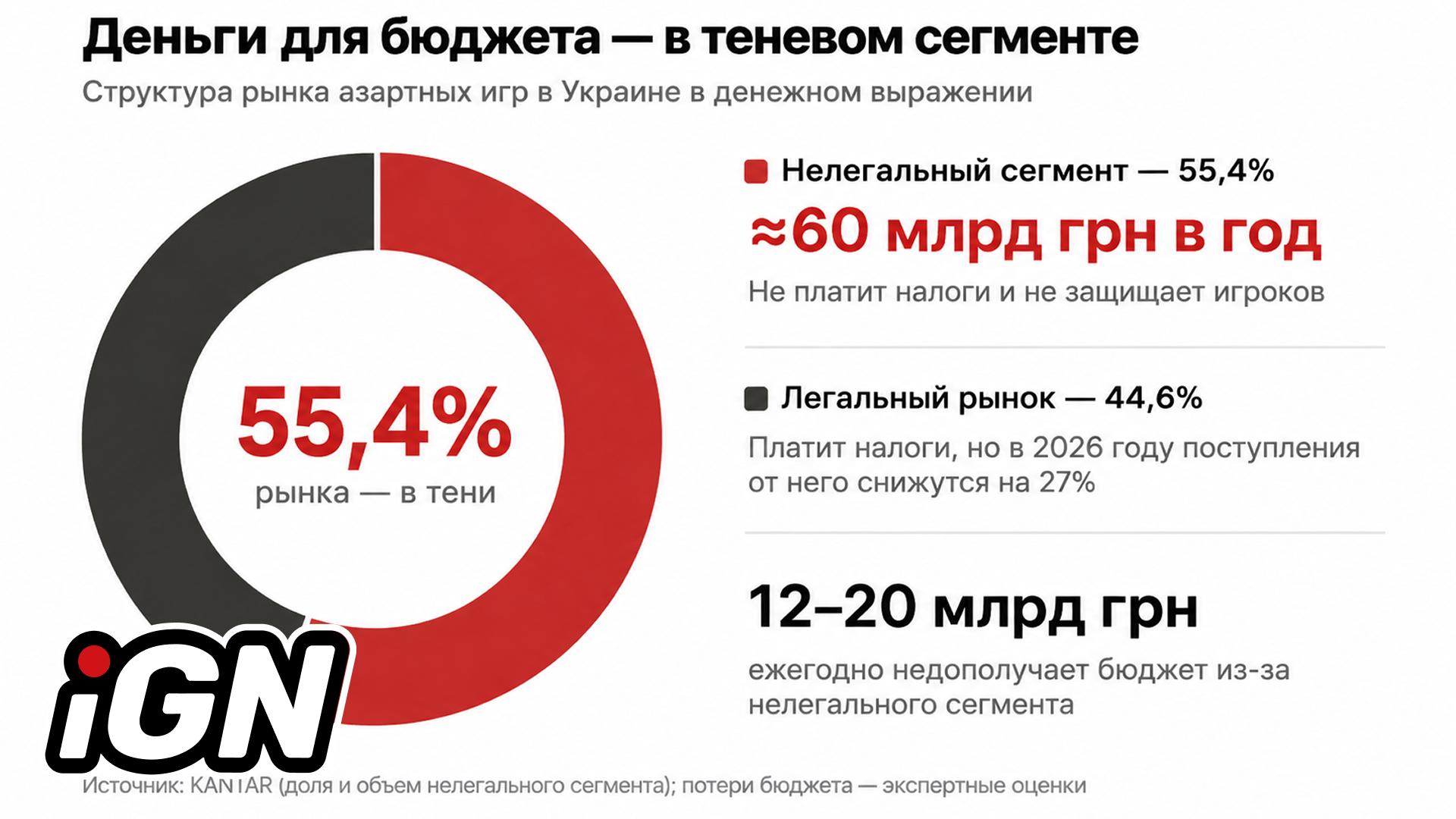
Tax revenues from Ukraine’s legal gambling sector could fall by 27% in 2026, according to projections by the Ukrainian Gambling Operators Association. The forecast, based on data from the State Tax Service and research firm KANTAR, was highlighted in a recent column by association president Taras Shevchenko.
Key figures reveal rising illegal market
The illegal gambling segment now accounts for 55.4% of Ukraine’s market, with an estimated annual volume of $1.4 billion. This shift is causing the government to lose between $280 million and $465 million in tax revenue each year. Regulatory actions have included blocking 16,000 iGaming sites and mirrors, revoking five licenses in January 2026, and issuing $23 million in fines. However, only about 1% of these fines have been paid, with most operators challenging them in court.
Tax revenue trends and causes of decline
In 2025, the industry generated $405 million in tax revenue. For the first half of 2026, collections dropped to $148 million, representing a 34% year-on-year decline. The full-year total is projected at $295 million, down 27% from the previous year. According to Shevchenko, the decrease is primarily due to the loss of licenses by two leading operators and the subsequent migration of their customers to unlicensed platforms.
Implications for industry stakeholders
The decline in legal sector revenues and the growth of the unregulated market present significant challenges for operators, affiliates, and regulators. The ongoing legal disputes—85 tax cases in court—and the low rate of fine payments undermine enforcement efforts. Shevchenko suggests that reforms such as granting legal operators access to the BankID identification system, introducing phased sanctions instead of outright license revocations, and taxing only winnings above the original bet could help stabilize the market and improve compliance.
Key takeaways
- Ukraine's gambling tax revenue is projected to fall by 27% in 2026.
- Illegal operators now control over half of the market, causing significant tax losses.
- Regulatory enforcement is hindered by legal challenges and low fine collection.
- Industry leaders are calling for regulatory reforms to support legal operators and curb the illegal sector.