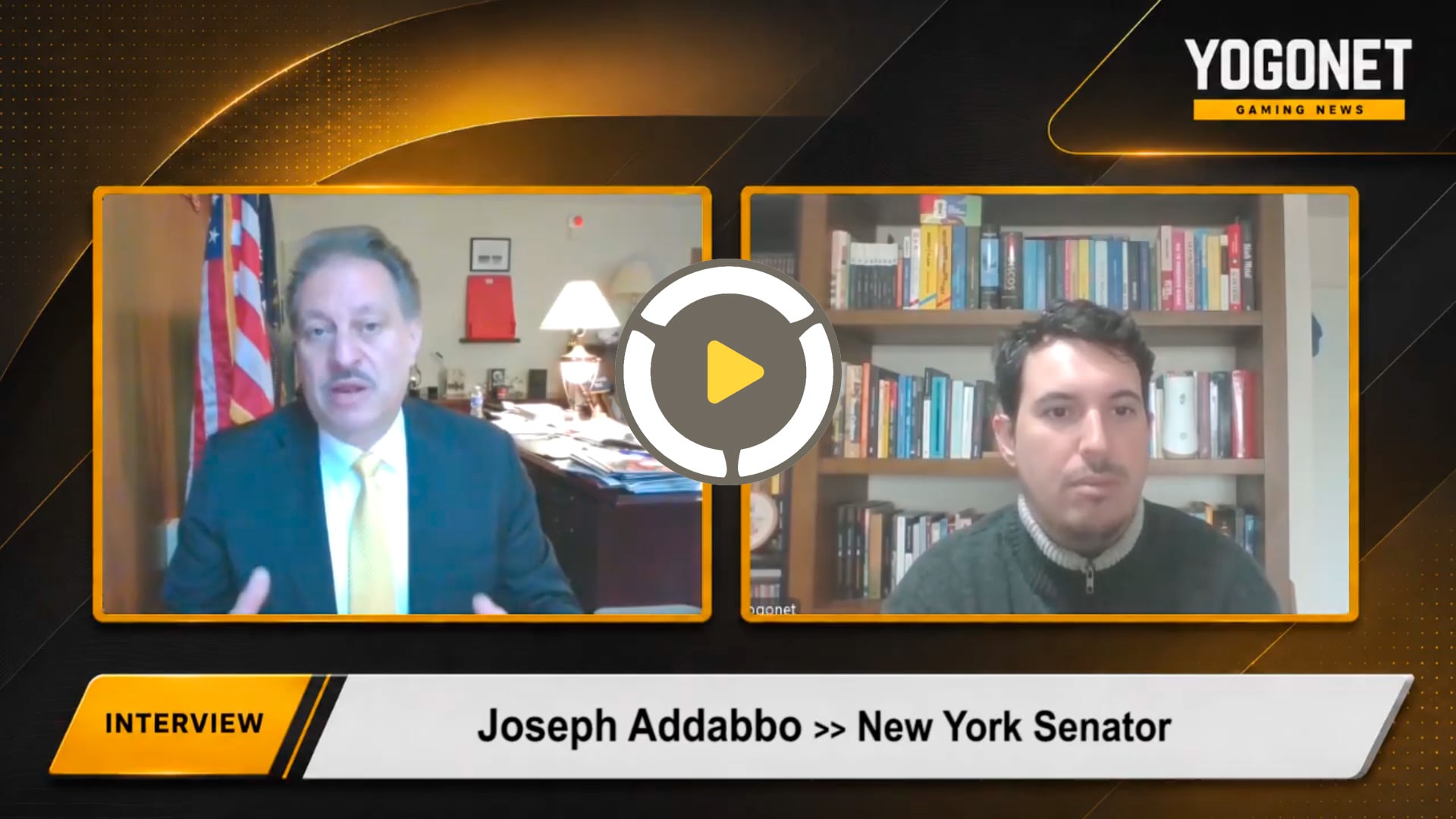
As New York positions itself as a leader in the changing U.S. gaming sector, Senator Joe Addabbo has emerged as a key figure in shaping this dialogue. Serving as the chair of the Senate Racing, Gaming and Wagering Committee, Addabbo has been instrumental in advancing major gambling initiatives in the state, including mobile sports betting, the expansion of casinos in downstate areas, and ongoing discussions regarding iGaming and prediction markets.
In a recent video interview with Yogonet, Senator Addabbo elaborated on the launch of New York’s latest full-scale casino projects, the heated debate surrounding prediction markets and sweepstakes operators, and his belief that the legalization of online casinos in the Empire State is not a question of if, but when. He also shared insights on responsible gaming, regulatory hurdles, and New York's strategy to stay competitive in the rapidly evolving entertainment sector.
When asked about the significance of the first full-scale land-based casino opening in Queens, Addabbo emphasized its potential for job creation, providing stable employment opportunities that can lead to long-term careers. Additionally, he highlighted the potential for increased revenue for education and public transportation, while also addressing the importance of raising awareness about problem gambling and enhancing support programs for addiction.
Currently, Resorts World holds a temporary monopoly on live table games until other casino projects, such as Bally’s in the Bronx and Hard Rock in Queens, are completed. Addabbo acknowledged the importance of ensuring long-term competition in the casino market, noting that Resorts World will have a three-year advantage during the construction of these new facilities. He expressed confidence that each casino will carve out its own niche and thrive even in close proximity to one another, as seen in markets like Atlantic City.
Prediction markets have emerged as a hot topic within the industry. Addabbo has suggested that rather than banning these markets, they should be regulated. He pointed out that prediction markets differ from traditional sports betting in that they are typically peer-to-peer, allowing participants to bet against one another rather than the house. This model presents significant revenue potential, but it also lacks necessary safeguards.
Concerns have been raised about prediction markets potentially targeting minors or individuals with gambling addictions. Addabbo advocates for regulation over outright bans, arguing that regulation can create a safer environment for consumers while generating revenue for the state. He believes that without regulation, those struggling with addiction remain unprotected. Regulation would enable the implementation of consumer safeguards and protections, ensuring a safer gambling experience for all.