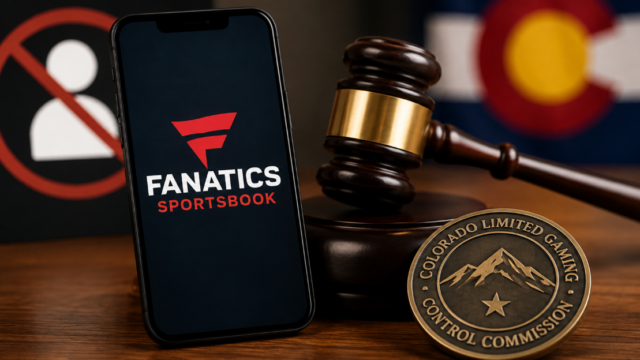
In light of recent regulatory infractions, industry stakeholders emphasize that the significance of a penalty lies more in its aftermath than its size. The Colorado Limited Gaming Control Commission recently imposed a $20,000 fine on Fanatics Sportsbook for mistakenly sending promotional offers to a self-excluded gambler on two occasions.
According to a Forbes report, Fanatics generated nearly $13 billion in revenue in 2025, with approximately $2 billion attributed to its gambling operations. Given this scale, one might question whether a $20,000 fine is a substantial deterrent.
Jamie Glick, executive director of the Problem Gambling Coalition of Colorado (PGCC), pointed out in a correspondence with Gambling Insider that the focus should not solely be on the monetary value of the fine. Instead, the critical inquiry is whether the penalty is significant enough to prompt behavioral changes and prevent future occurrences.
Glick stressed that self-exclusion is a crucial consumer protection mechanism. When individuals opt for self-exclusion, the systems in place should support that decision rather than undermine it through promotional outreach.
For those grappling with gambling-related issues, even a single promotional message can have a profound impact. Thus, compliance should not merely be viewed as a business expense; penalties must ensure accountability that encourages operators to invest in the necessary technology, processes, and oversight to avert such lapses.
Although the PGCC does not partake in deciding regulatory penalties, Glick believes that regulators should tailor fines based on the unique circumstances of each case. From a public health standpoint, the effectiveness of a penalty should ultimately be measured by its ability to safeguard consumers and diminish the chances of recurrences.
In accordance with the stipulation agreement between the Colorado gaming commission and Fanatics, the customer, identified as 'T.M.,' placed themselves on the self-exclusion list on January 15, 2026. However, on February 1, they received a promotional text from Fanatics' VIP team. Even after Fanatics recognized the error and provided training to its VIP representatives on February 4, the customer received another promotional message on February 17.
Derek Kuhn from the Colorado Department of Revenue explained via email that the decision to impose a fine was made under a “framework of progressive discipline.” The Division of Gaming assesses each infraction against statutory guidelines, published rules, and prior cases to ensure that penalties reflect a commitment to responsible gaming.
Kuhn noted that the fine amount was determined based on the “specific number of violations,” which in this instance was two. The decision also considered any proactive measures taken by Fanatics to address the issue. Under Colorado's progressive framework, repeated violations could lead to fines of up to $25,000 for each infraction.
Fines are determined on a case-by-case basis, with consequences for operators escalating according to the nature and frequency of violations, while statutory maximums set the upper limits for penalties.