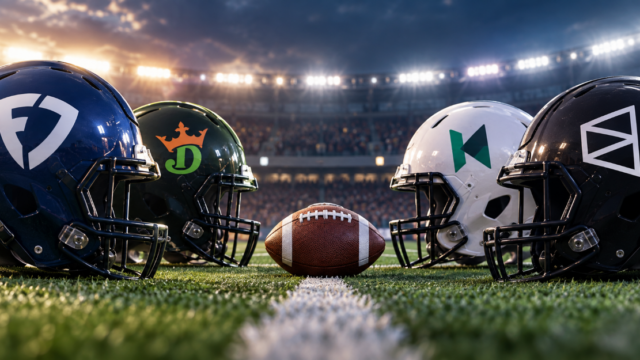
The current football season marks a significant shift in betting dynamics, as prediction markets are increasingly competing with established platforms like FanDuel and DraftKings. While traditional sportsbooks are making adjustments, they may find it challenging to keep pace with emerging players like Kalshi and Polymarket, who are attracting exchange-based bettors.
KalshiandCrypto.com, in collaboration with Underdog, was among the few federally-regulated prediction markets in the U.S. to offer NFL betting at the start of last season. Fast forward a year, and nearly a dozen such platforms are now vying for the attention of American gamblers, aiming to solidify their presence in the market, often at the expense of state-regulated sportsbooks that they consider competitors, despite their claims of providing a different betting experience.
Even as prediction markets navigate through challenging legal landscapes, their impact on the future of sports betting is undeniable. BetMGM, unlike its rivals DraftKings, FanDuel, and Fanatics, has yet to launch a prediction market app, but it has enhanced its existing app to cater to exchange users ahead of the season's kickoff.
Jeff Laniado, the sales director at marketing platform Optimove, emphasized that the competition for the lucrative NFL betting market is set to intensify. He stated, “This NFL season feels particularly pivotal.”
According to a recent study by Optimove, 60% of NFL bettors are expected to engage with prediction markets this year. Last September, Kalshi alone processed $5 billion in volume, primarily from sports betting. With the addition of more platforms, that figure surged to $24 billion by April, even before the excitement of the FIFA World Cup.
Laniado pointed out that this growth is substantial compared to last year, predicting an even larger scale of activity. He mentioned that Kalshi and Polymarket are ramping up their marketing efforts and customer acquisition strategies, with Polymarket gearing up for its first NFL season in the U.S.
In addition to these developments, traditional sportsbooks are launching targeted advertising campaigns in states like California, Georgia, and Texas, where sports betting remains illegal. DraftKings has recently rolled out state-specific ads in these regions, incentivizing new customers with a $200 bonus after a $5 initial trade.
Interestingly, these platforms are also attracting younger customers below the minimum betting age in many states. Reports indicate that $5.4 billion has been wagered on Kalshi this year by individuals aged 18 to 21, while most states require bettors to be at least 21 to participate in licensed sportsbooks.
Laniado remarked that the current marketing landscape may resemble the intense promotional activities seen during the 2018-19 period when daily fantasy sports transitioned into real-money sports betting. He recalled how ubiquitous FanDuel and DraftKings advertisements were during that time, suggesting that a similar atmosphere may return soon.
Furthermore, prediction market users have shown a growing interest in parlays and combos, indicating a shift in betting preferences.