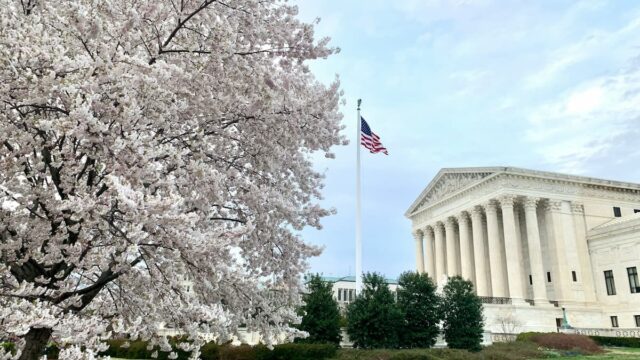
The ongoing legal battle between New Jersey and prediction market operator Kalshi has attracted significant attention, with 11 amicus briefs urging the US Supreme Court to review the case. The dispute centers on whether sports-event contracts traded on exchanges like Kalshi are considered swaps under federal law, and if the Commodity Exchange Act (CEA) preempts state-level gambling regulation. The case has seen input from a diverse group of stakeholders, including 39 states, Washington, D.C., the NFL, tribal governments, gambling regulators, and former federal officials.
Debate Over Federal and State Oversight
A key issue raised in the briefs is the CFTC’s self-certification process, which allows exchanges to list new contracts without prior agency approval. Critics, including former Senator Christopher Dodd, the Casino Association of New Jersey, and the NFL, question whether this framework provides adequate oversight and respects the traditional authority of states to regulate gambling. The Casino Association of New Jersey specifically points to a lack of enforcement of existing regulations on event contracts, while the NFL raises concerns over the CFTC’s ability to keep pace with the growing number of contracts.
Potential Impact on Traditional Sportsbooks
Several amici warn that classifying sports wagers as swaps could have far-reaching consequences for traditional sportsbooks. This interpretation might subject conventional sports betting to federal swap regulations, potentially rendering many off-exchange bets illegal. The CFTC has responded by issuing an interim rule to exclude casino-style gambling from the swap definition, while proposing to include event contracts tied to sports and other outcomes. The distinction between operator-held risk in sportsbooks and peer-to-peer trading in prediction markets remains central to the debate.
Tribal Sovereignty and Jurisdictional Challenges
The Cabazon Band of Cahuilla Indians highlighted the impact of Kalshi's operations on tribal lands, arguing that such activity can violate tribal gaming ordinances and the Indian Gaming Regulatory Act (IGRA). A recent Ninth Circuit ruling found that Kalshi’s sports contracts constituted Class III gaming under IGRA when accessed from tribal territory, prompting the operator to geofence those areas. This raises broader questions about the intersection of federal regulation and tribal authority over gaming.
Age Restrictions and Responsible Gambling Concerns
The American Gaming Association (AGA) has pointed out discrepancies in minimum age requirements between state-regulated sportsbooks and prediction markets like Kalshi, which allows trading by individuals 18 and older. This difference, according to the AGA, could undermine state-level protections for underage gambling. Some prediction markets have voluntarily set higher age limits, while Kalshi has implemented additional safeguards for younger users.
Why This Matters for the Industry
The outcome of this case could reshape the regulatory landscape for both prediction markets and traditional gambling operators. If the Supreme Court clarifies the boundaries between federal and state oversight, it may affect how event contracts are offered, enforced, and supervised. Operators, affiliates, and regulators are closely watching for guidance on compliance, jurisdiction, and consumer protection standards as the legal framework evolves.
Key takeaways
- Supreme Court review of Kalshi's case could clarify federal vs. state gambling regulation.
- CFTC oversight and self-certification processes are under scrutiny from industry stakeholders.
- Tribal sovereignty and age restrictions highlight complex jurisdictional and consumer protection issues.
- The outcome may significantly impact how sportsbooks and prediction markets operate in the US.