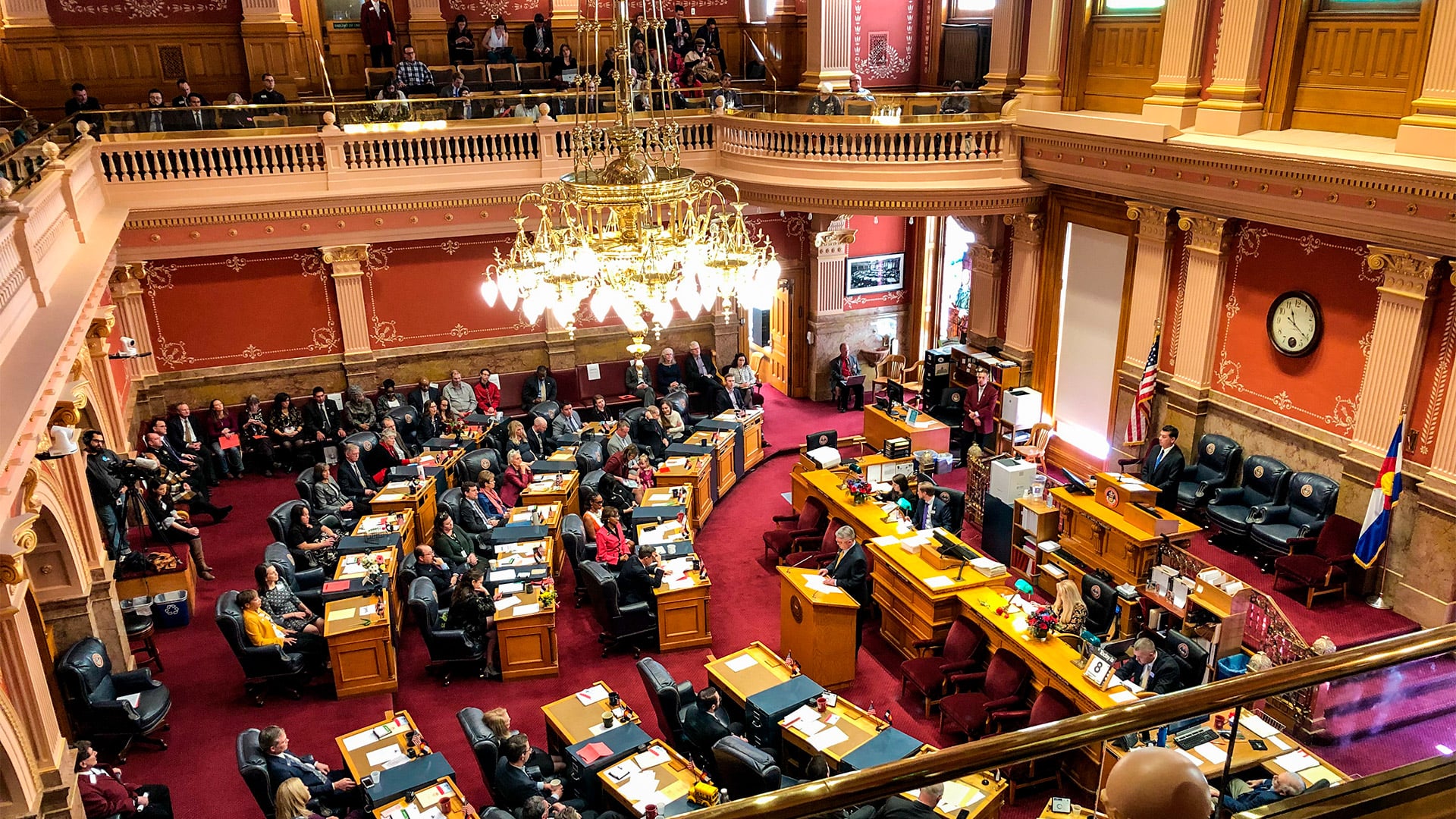
Lawmakers in Colorado have passed a new bill aimed at imposing stricter regulations on online sports betting. This legislation includes daily deposit limits and prohibits gambling apps from sending promotional push notifications.
Senate Bill 131 is now pending approval from Governor Jared Polis and could set a precedent as the first state in the U.S. to restrict the number of daily deposits a bettor can make in a sportsbook app.
According to the proposed law, bettors would be allowed a maximum of six deposits each day, although there would be no limit on the amount of money that can be deposited in each transaction. Additionally, gambling operators would be banned from sending notifications that encourage users to place bets or make deposits.
The bill also seeks to eliminate the use of credit cards for deposits into sportsbook accounts, a measure supporters argue is designed to prevent gamblers from wagering money they do not possess. Currently, five out of Colorado's 13 online sportsbooks already do not accept credit card deposits.
The Senate approved amendments from the House on the last day of the legislative session, sending this bipartisan initiative to the governor for consideration.
Senator Matt Ball, a Democrat from Denver and one of the bill's sponsors, noted that research indicates a correlation between frequent deposits into online betting accounts and higher-risk gambling behavior.
“Deposit limits are recognized as an effective tool for harm reduction, aimed at introducing barriers to loss-chasing behavior and mitigating extreme outcomes, especially among high-intensity users,” he stated.
Ball also pointed out that repeated push notifications can lead to continued betting after losses, fostering impulsive gambling behavior.
However, the legislation faced pushback from sportsbook operators and industry groups, who argued that such restrictions could result in revenue declines and customer dissatisfaction.
An earlier draft of the bill proposed banning proposition bets, which allow wagers on individual athlete performances and are often included in parlays. This provision was ultimately removed due to industry opposition.
Operators maintain that proposition bets are popular among bettors for their potential for larger payouts and their contribution to sportsbook revenues.
Colorado's sports betting market has shown robust activity, with wagers surpassing $4.4 billion and generating $27 million in tax revenue during the first nine months of fiscal year 2025. In September 2025 alone, sportsbooks reported $608.8 million in bets and $46 million in gross gaming revenue. Tax revenues from this sector are partially allocated to water conservation projects in Colorado.
Between 6 million and 10 million Americans are estimated to suffer from severe gambling disorders, with an additional 10 million to 15 million considered at risk. The most affected demographics include young adults aged 18-34, men, and mobile sports bettors.
Proponents of the bill argue that it addresses behavioral triggers related to problem gambling and online betting.
Brianne Doura-Schawohl, director of the Campaign for Fairer Gambling, praised the legislation as offering “revolutionary consumer protections” and urged Governor Polis to sign it into law.
Eric Maruyama, a spokesperson for the governor, stated that Polis will carefully review the final version of the bill.
If enacted, this legislation could serve as a model for other regions looking to implement responsible gambling policies in relation to online betting platforms.
Federal regulations like the Unlawful Internet Gambling Enforcement Act of 2006 and the Wire Act provide a framework for interstate gambling activities and financial transactions, while harm-reduction strategies largely fall under state jurisdiction.
This proposal arrives as legalized sports betting continues to proliferate across the United States, with 39 states, Washington D.C., and Puerto Rico having legalized some form of sports betting, and 30 states currently allowing online or mobile wagering.