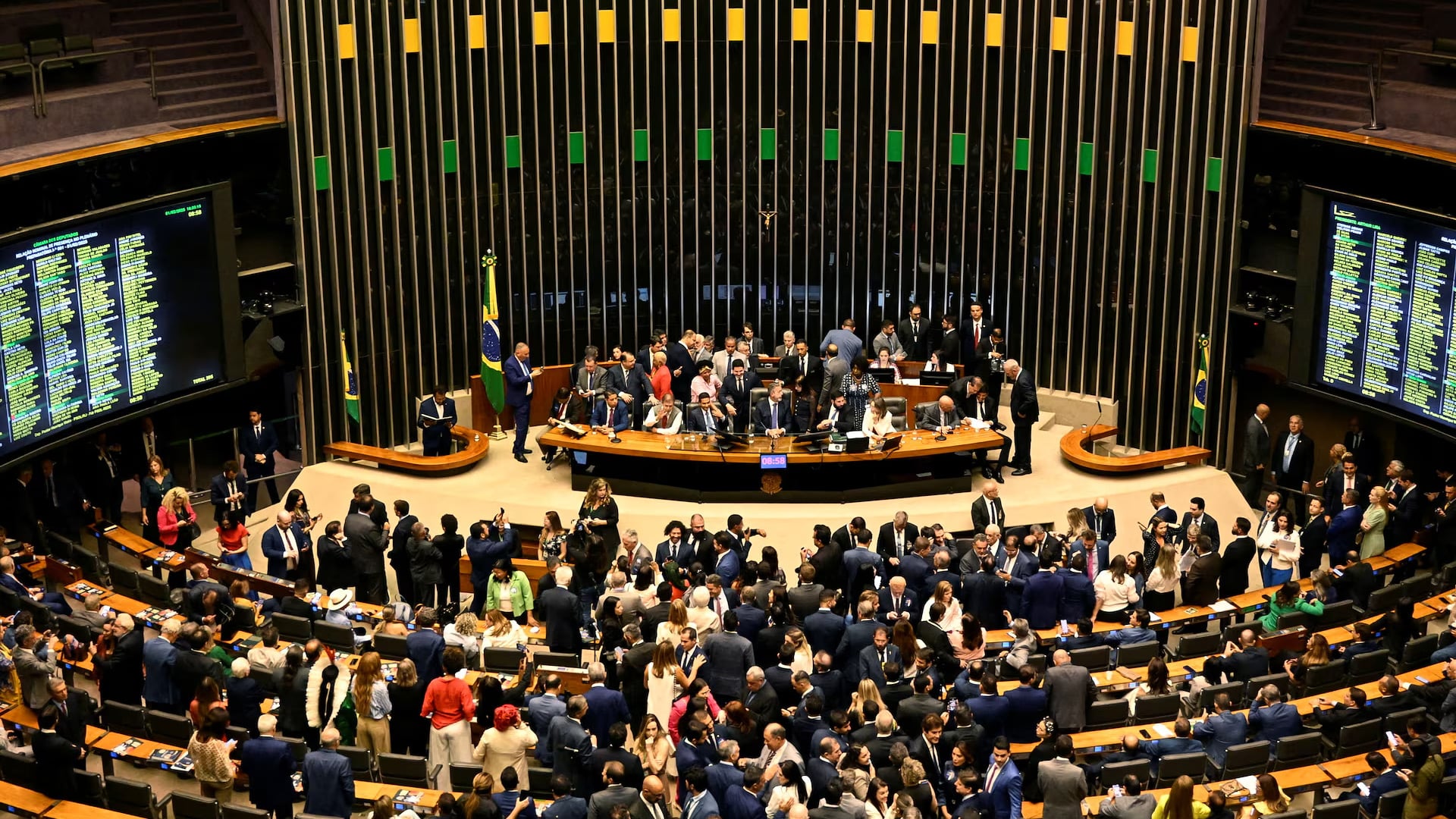
A coalition of Brazilian legislators has put forward a bill aimed at banning fixed-odds betting nationwide, raising concerns about the practicality of such legislation amid ongoing political and financial discussions.
Presented in the Chamber of Deputies on Tuesday, Bill 1808/2026 has garnered support from 68 lawmakers, primarily from the Workers’ Party, which saw backing from 65 of its 66 members, along with two from PSOL and one from REDE.
If passed, this legislation would repeal significant elements of existing laws No. 13.756 from 2018 and No. 14.790 from 2023, effectively dismantling the current regulatory framework governing betting activities. The proposed law aims to prohibit the operation, promotion, advertising, and facilitation of fixed-odds betting across Brazil, including services offered by foreign companies targeting Brazilian customers.
The bill's authors argue that the primary goal is to safeguard the Brazilian populace from the severe social, economic, and public health repercussions associated with fixed-odds betting.
Additionally, the legislation outlines enforcement strategies, such as blocking access to websites and applications, removing them from search engine results, and halting financial transactions related to betting platforms.
The National Telecommunications Agency would be responsible for implementing access blocks, with operators required to comply within 24 hours. Liability for compliance would extend to platforms, intermediaries, and payment processors involved in these services.
Moreover, the proposal includes measures aimed at reducing social harm, such as establishing support and treatment programs for gambling addiction and launching public awareness campaigns about the risks of betting. Lawmakers emphasize these initiatives as part of a broader social protection strategy addressing issues like debt, addiction, and the effects of gambling on household finances and the economy.
Deputy Pedro Uczai, leader of the Workers’ Party and the Federation of Hope Brazil Bloc, has circulated an invitation for fellow legislators to co-author the bill. In a message, he stated, “I invite you to join as co-authors of the Bill that prohibits the exploitation and facilitation of fixed-odds betting, revokes certain provisions of existing laws, and establishes measures for blocking access and holding intermediaries accountable. Your participation is essential.”
Despite the strong backing from the Workers’ Party, members of allied parties PCdoB and PV, which are part of the same parliamentary coalition, have not supported the initiative.
This legislative effort occurs amid ongoing discussions regarding the economic and social implications of betting. A recent study presented in Brasília by LCA Consultoria Econômica, titled “Household Debt and Default in Brazil – Evidence on Recent Dynamics and Impact Factors,” challenges the notion that increasing household debt is mainly caused by sports betting.
Another study from March indicates that Brazilians participating in online sports betting and gaming tend to spend relatively modest amounts monthly.
Simultaneously, President Luiz Inácio Lula da Silva has ramped up his criticism of betting platforms, making it a focal point in the government’s public messaging. The administration's communication strategy has linked betting issues with banks and wealthy individuals under the term “BBB Taxation.” Analysts interpret this rhetoric as politically motivated, especially in an election year, where tougher language may appeal to voters.
Nevertheless, with the potential for betting to generate substantial public revenue, both the executive and legislative branches are faced with complex challenges ahead.