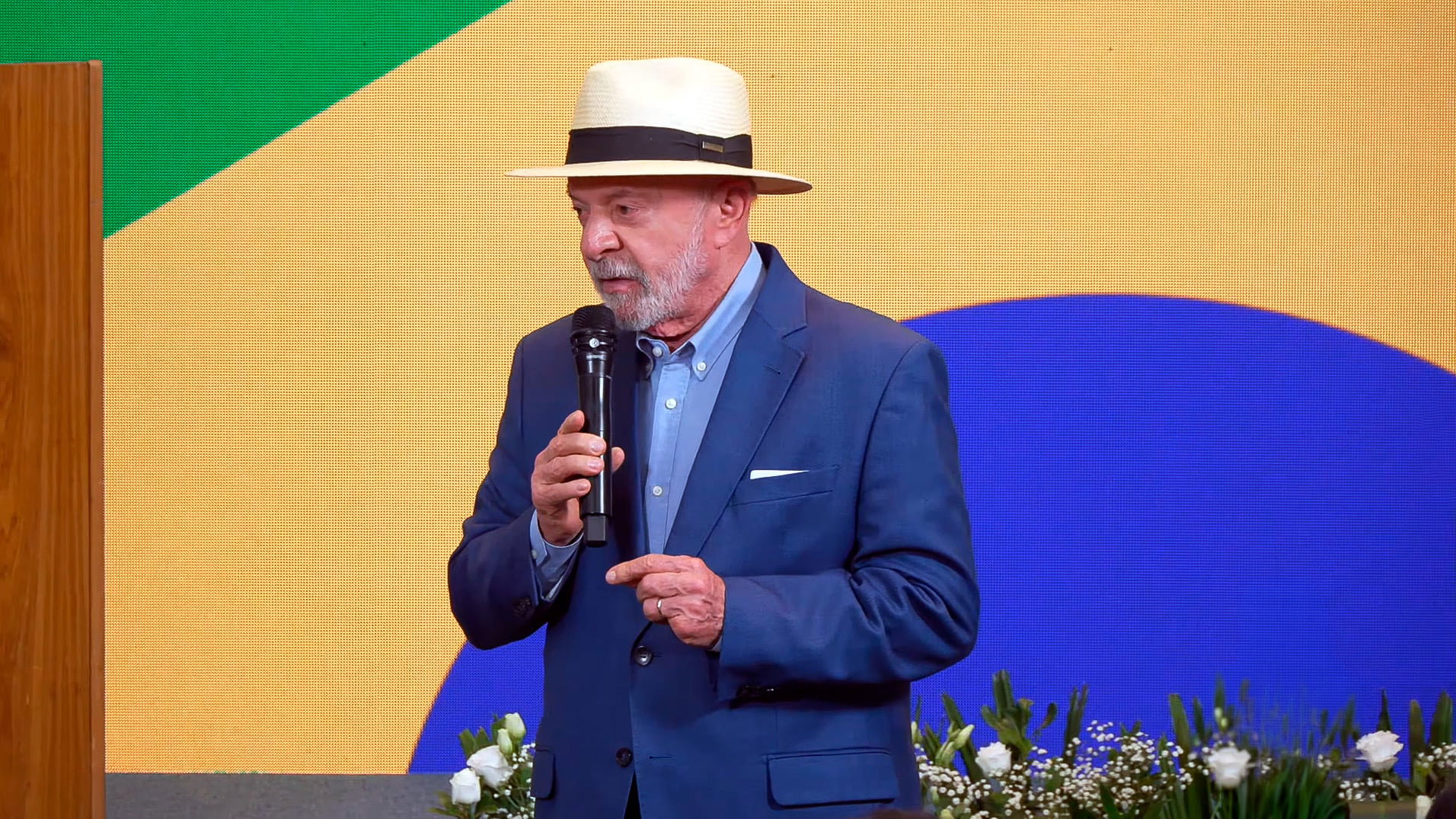
Brazilian President Lula da Silva has escalated his attacks on online betting firms, increasingly framing gambling as a societal issue that resonates with more conservative factions within Brazilian society.
Silva has labeled betting companies as a “scourge of lies,” emphasizing their detrimental effects on youth and low-income workers. He has associated gambling with rising debt levels and worsening working conditions.
The president has expressed a desire to abolish gambling altogether but recognizes that such a decision would encounter significant political hurdles. He has highlighted the gambling industry's strong presence in Congress as a major barrier to any efforts aimed at eliminating betting.
“I am aware of the gambling lobby in Congress,” he remarked. “However, this is a battle we must engage in, as society should not be destabilized by something we can manage.”
In the meantime, the federal government is exploring measures across various ministries. The president noted that talks are underway with the ministries of finance, planning, and justice as the administration seeks to address the social repercussions of gambling. “We are collaborating with the ministries to devise a plan of action,” he stated.
However, any attempt to eradicate the regulated gambling sector could have significant implications for public finances. In the first half of 2026, gambling generated nearly BRL7.3 billion (approximately $1.4 billion) for the government. In 2025, Brazil collected close to BRL10 billion from gambling activities, excluding concession and regulatory fees, indicating that a ban could eliminate a vital source of federal revenue and exert additional pressure on the national budget.
Lula has persistently advocated for his stance in public forums. During a speech at the Ministry of Labour, he described sports betting as a financial trap for workers, and he utilized interviews on two podcasts as platforms to voice his concerns.
“If no one can provide a social justification for the continuation of these betting platforms, we must put an end to them,” he asserted.
Da Silva has leveraged the gambling debate to bolster his support for formal employment while criticizing economic models that, in his opinion, take advantage of the population's financial vulnerabilities. Consequently, his opposition to betting has become intertwined with his messaging on social welfare and household debt.
Nonetheless, a potential ban raises concerns about the illegal gambling sector. Research conducted by LCA and Instituto Locomotiva suggests that unauthorized operators currently account for between 38% and 44% of total sports betting and online gambling activities. Thus, prohibiting regulated betting might not eliminate demand but could instead push players towards illegal alternatives.
Bernardo Freire, legal advisor for the National Association of Games and Lotteries (ANJL), contends that eliminating licensed betting companies would equate to “complicity with crime” by bolstering the unregulated market.
At an ANJL event hosted with Grupo Globo, Freire cautioned that players using licensed operators might shift to illegal platforms if regulated sites were closed. “If 40% of the population is already engaged in this market today, a ban will push the 60% who currently bet on licensed platforms towards the illegal ones,” he warned.