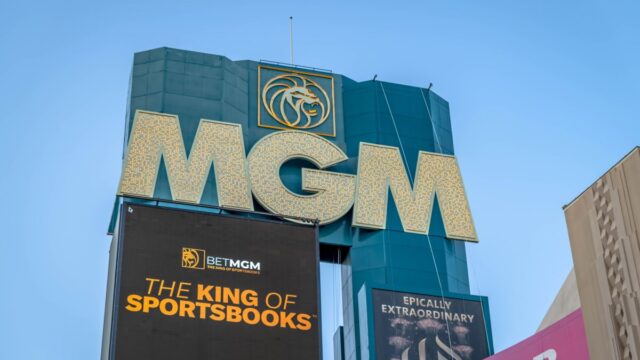
Experts are optimistic about the future of tourism in Las Vegas and the growth of the digital sector, viewing these as favorable factors for Barry Diller's proposed acquisition of MGM Resorts.
The potential merger of two major players in the gambling industry is expected to disrupt the market. However, analysts highlight challenges such as increasing competition in online sports betting, a decline in Las Vegas tourism, and the emergence of prediction markets as manageable hurdles for both Diller and Tilman Fertitta.
Diller’s People Incorporated, which owns a 26.1% stake in MGM Resorts, has made an offer to purchase the remaining shares of the company. This announcement follows Fertitta Entertainment's recent agreement to acquire Caesars Entertainment in a substantial $17.6 billion deal, which includes $11.9 billion in debt, pending regulatory approval.
Chad Benyon, Head of US Research at Macquarie Capital, mentioned to Gambling Insider that his firm had previously rated MGM Resorts as “outperform” before Diller’s bid. He anticipates several catalysts this year that could enhance the stock's performance across various assets in Las Vegas, regional locations, Macau, and the digital sector.
Las Vegas represents approximately 58% of MGM's portfolio, with the company managing around 40,000 hotel rooms across 13 properties, accounting for about a quarter of the total inventory. Caesars, on the other hand, operates roughly 20,600 rooms in eight resorts along the Strip and downtown, making it the second-largest operator in the city.
Despite a downturn in tourism over the past few years, the outlook remains optimistic due to the influx of visitors eager to spend money. Benyon stated, “We believe that experiences will continue to grow and exist, especially with the rise of technology and AI. This sector serves as a way for people to disconnect, and with the wealth created over the last decade for those with retirement accounts, we foresee strong travel demand in the coming years.”
Benyon's perspective aligns with Diller's assertion that MGM possesses “real world assets that AI cannot easily replicate or disintermediate.”
In an analysis of People Inc’s proposal, Citizens Managing Director Jordan Bender noted, “Given its long history as a shareholder, we believe the proposal carries greater credibility than a typical unsolicited approach. Overall, we view the proposal as a strong validation of MGM’s underlying value and as evidence that the company’s assets remain more valuable than recent public market trading levels imply.”
The market has reacted positively to Diller's announcement, with MGM shares rising from $43.19 at the end of Friday to a peak of $51.41 on Monday, the day the news was released.
Regarding BetMGM, MGM Resorts’ digital division, it currently ranks third behind FanDuel and DraftKings in the online sports betting market. However, Diller emphasized “exceptional digital growth opportunities” in his letter to the company’s board outlining his bid.
According to data from Macquarie, BetMGM, co-owned with Entain, showed impressive growth in 2025, surpassing market leaders. The potential for exponential growth exists if online casinos are legalized more widely, which the industry is hopeful for.
“In 2025, MGM led the digital space with 30% growth, outperforming all major competitors. For 2026, the market anticipates single-digit growth (higher for iGaming), which could accelerate with the legalization of new iGaming markets. Growth from Alberta is expected in 2026, and we predict further market expansions in 2027 and 2028,” Benyon said.
While customer acquisition costs may rise slightly due to the threat of prediction markets, an emerging sector that neither MGM nor Caesars plans to enter, Benyon maintains a positive outlook.