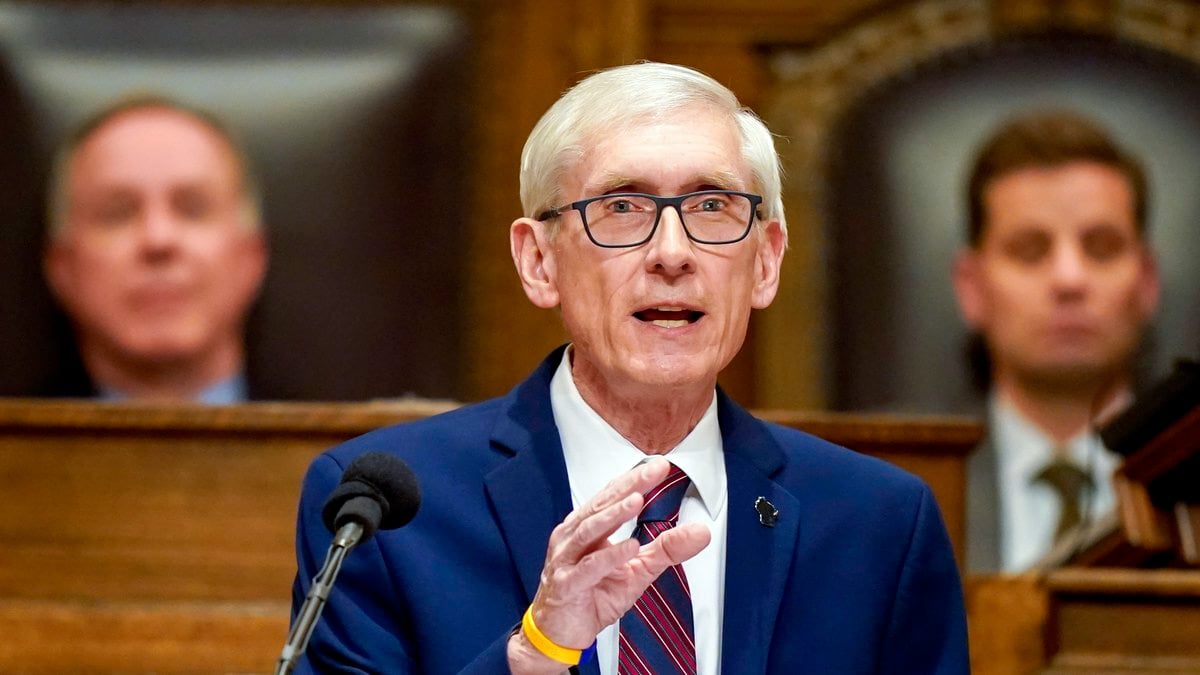
Wisconsin's Governor Tony Evers has commenced discussions with the leaders of the state's 11 federally recognized tribes regarding the implementation of legal online sports betting. This marks a significant step towards establishing mobile wagering across the state, following the recent passage of enabling legislation.
The discussions follow Evers' signing of Assembly Bill 601 in April, which legalized online sports betting in Wisconsin. However, the launch of statewide mobile wagering hinges on the renegotiation and approval of tribal gaming compacts by both the tribes and the state, along with the endorsement from the U.S. Department of the Interior's Bureau of Indian Affairs.
Wisconsin's gaming framework operates under agreements between the state and tribal nations, making the involvement of tribes essential for the successful rollout of online betting.
Britt Cudaback, a spokesperson for Evers, indicated that this meeting was merely the first of many necessary discussions as the state and tribes prepare for compact negotiations.
The new law permits sports betting to be conducted anywhere in Wisconsin via mobile devices, provided that the transactions are processed through servers situated on tribal lands. This legislation adopts a 'hub and spoke' model, where tribal servers act as hubs and bettors across the state serve as spokes.
Evers has encouraged tribes to consider a joint-venture structure that would ensure all 11 federally recognized tribes equally benefit from the emerging market. He emphasized, 'I will not accept a plan that fractures this opportunity into unequal pieces, allowing some tribes to reap great benefits while leaving only crumbs for others.'
He further stated, 'An approach that exacerbates long-standing inequalities among Tribal Nations is not good for Wisconsinites or Wisconsin. I will not entertain it as governor.'
The governor's office has expressed support for a model where tribes contribute and benefit equally, while also acknowledging that tribal leaders ultimately decide what is best for their communities.
All 11 tribes have backed the legislation and urged Evers to sign it, setting the stage for negotiations on updated gaming compacts.
As Evers prepares to leave office at the year's end, having opted not to seek re-election, the urgency of finalizing new agreements increases, as failure to do so may leave the process to his successor.
Currently, Wisconsin allows in-person sports betting at select tribal casinos but does not permit statewide mobile wagering. Recent amendments to tribal gaming compacts have enabled the Oneida Nation, Forest County Potawatomi, and Ho-Chunk Nation to offer on-site sports betting.
Proponents of online wagering argue that a regulated market would provide consumers with legal alternatives to offshore sportsbooks, which operate outside U.S. regulatory oversight and are not subject to Wisconsin's consumer protection and responsible gaming requirements.
However, not everyone is in favor of expanding gambling in the state. Republican U.S. Representative Tom Tiffany has voiced his opposition to broader gaming expansion in Wisconsin, stating, 'I do not support an expansion of gaming in Wisconsin.' He specifically mentioned his disapproval of proposed projects like the Kenosha casino, emphasizing his general opposition to expanding gaming in the state.