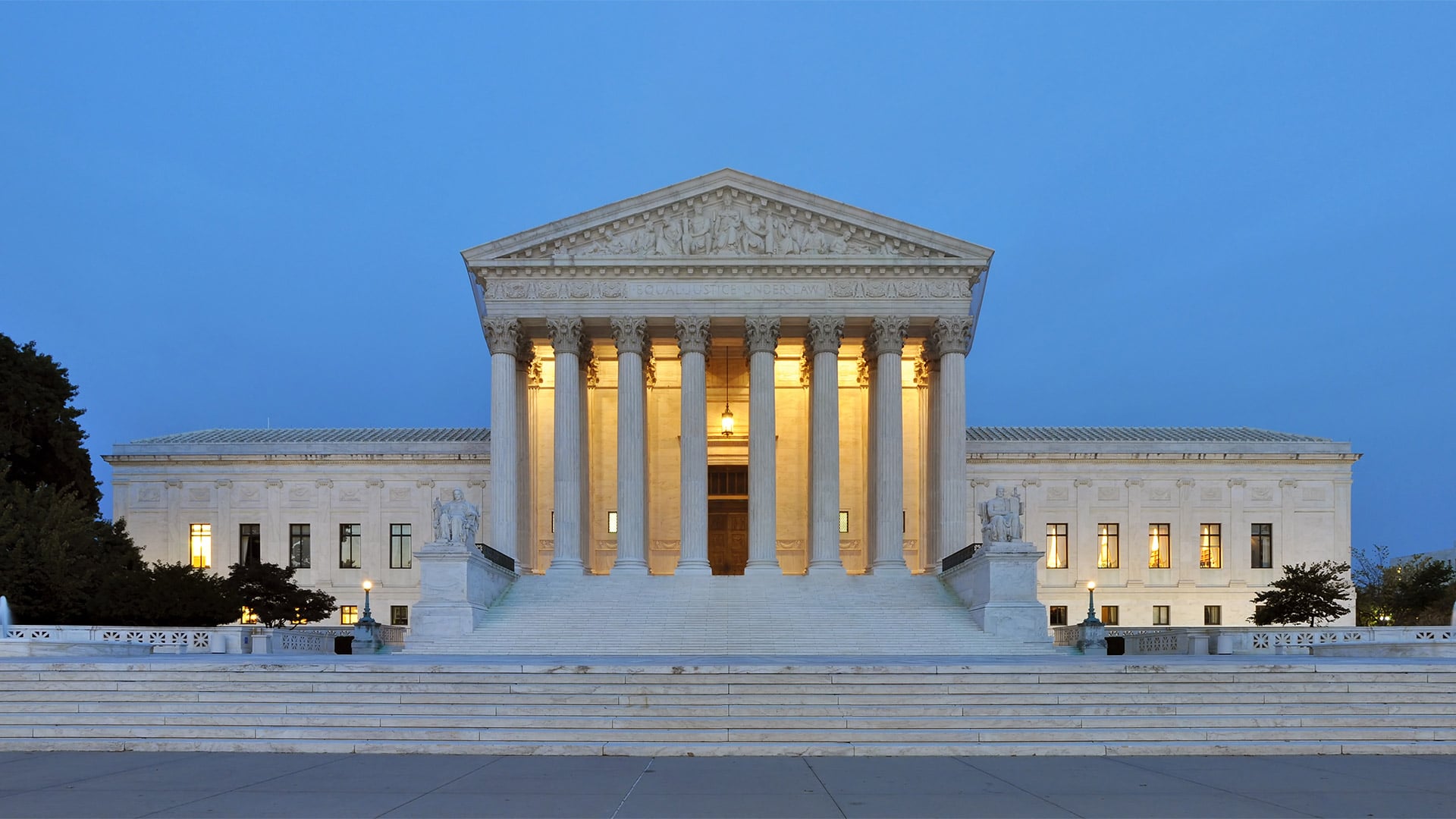
Crypto.com and Robinhood have approached the U.S. Supreme Court to seek clarification on whether the Commodity Futures Trading Commission (CFTC) holds exclusive jurisdiction over sports prediction markets. This request comes amid a backdrop of conflicting rulings from federal appeals courts and various state enforcement actions.
The petitions were prompted by a recent Ninth Circuit decision regarding Nevada, which determined that contracts related to sports events do not qualify as swaps under the Commodity Exchange Act. This ruling also dismissed claims that federal regulations override state gambling laws. Crypto.com’s North American Derivatives Exchange submitted its petition on September 11, shortly after Robinhood filed its own.
A spokesperson for Robinhood stated, “The Supreme Court now has the opportunity to provide clarity on the regulation of prediction markets, which we believe rightly sits with the CFTC.” They emphasized the importance of ensuring that all eligible customers can access these markets to gather information, hedge risks, and speculate on future events.
Crypto.com is urging the court to determine whether the Commodity Exchange Act preempts state regulations concerning sports-event contracts traded on a Designated Contract Market. This question mirrors one raised by New Jersey in a separate Supreme Court petition related to Kalshi and a Third Circuit ruling that favored the platform’s claims for federal regulation.
According to Crypto.com, sports contracts should be classified within the federal derivatives framework as their payouts are contingent upon the outcomes of sporting events, which can have significant economic implications. The filing states, “Sports-event contracts are swaps because their payout depends on the occurrence of a sporting outcome (the ‘event or contingency’ — e.g., did the Rams make the playoffs?) that is associated with potential economic consequences.”
Furthermore, Crypto.com argues that these contracts can help manage financial risks linked to sporting outcomes, citing businesses such as vendors and merchandise sellers whose operations may hinge on the occurrence and outcome of events.
They also highlight Congress’ inclusion of gaming in the categories that the CFTC can regulate under specific rules, asserting that this acknowledgment confirms Congress anticipated the interaction between swaps and gambling that the Ninth Circuit claimed was unimaginable.
A spokesperson for Crypto.com remarked, “Today’s petition to the Supreme Court is a crucial step toward achieving clarity on who regulates federally registered prediction markets. We trust in the judicial process and are confident the Court will determine that these significant financial instruments fall under exclusive CFTC oversight.”
The ongoing dispute has also reached Connecticut, where cease-and-desist orders have been issued to Crypto.com, Robinhood, and other platforms involved in offering sports-related event contracts. Underdog has filed a lawsuit against the state, contending that federally traded sports prediction contracts are under the sole jurisdiction of the CFTC.
Meanwhile, Kalshi is seeking an en banc rehearing at the Ninth Circuit after a three-judge panel ruled against its sports contracts, concluding that they do not qualify as swaps and that current CFTC regulations prevent designated contract markets from listing certain gaming-related products. Kalshi claims that the panel misinterpreted federal law and regulatory guidelines.
The CFTC has sided with Kalshi regarding the Ninth Circuit's interpretation, but the court has rejected both arguments. CFTC Chair Michael Selig has separately outlined plans for a more defined national framework for prediction markets.