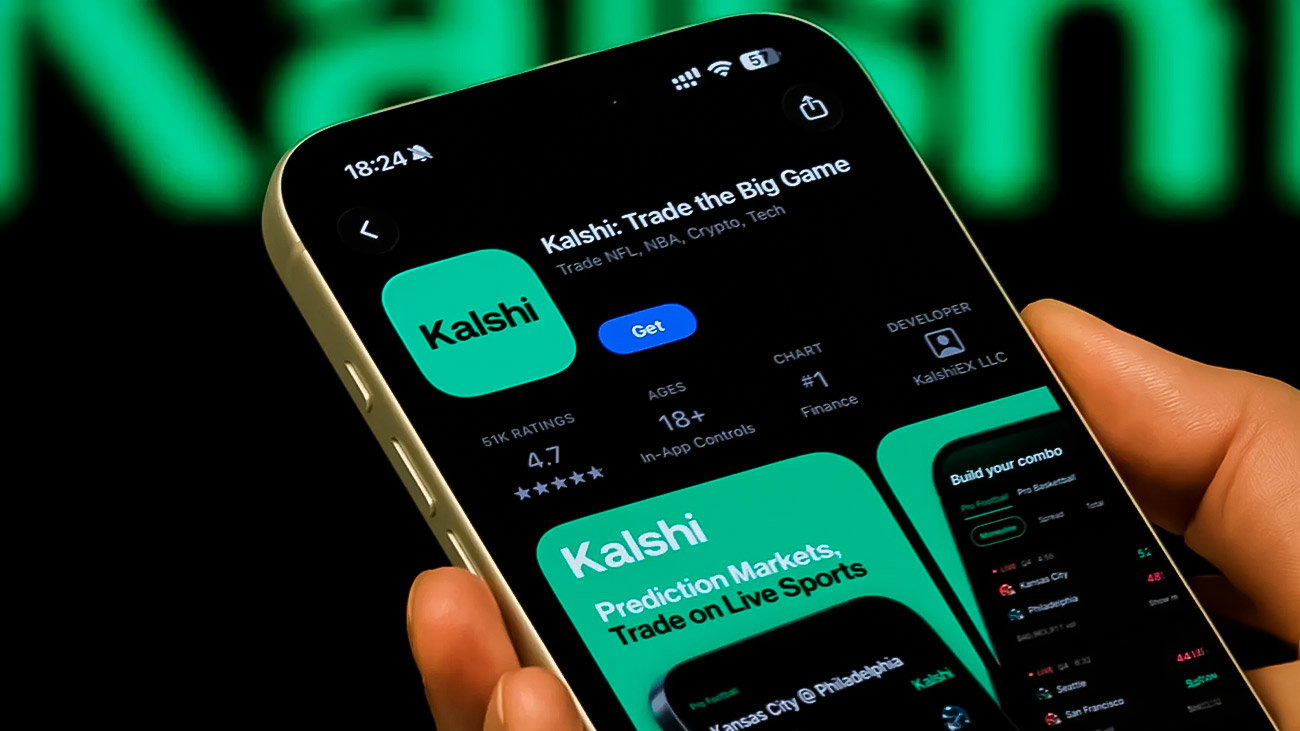
The 9th U.S. Circuit Court of Appeals has determined that Nevada possesses the authority to regulate Kalshi's sports-event contracts in accordance with state gaming legislation. This ruling poses a significant challenge for the prediction market operator and highlights a division among federal appellate courts.
In a unanimous 3-0 verdict, the San Francisco-based court indicated that Kalshi is unlikely to demonstrate that the federal Commodity Exchange Act prevents Nevada from mandating a gaming license for contracts related to sporting events.
The appeals panel remarked, “The essence of the sports event contracts available on Kalshi’s exchange is sports gambling, irrespective of Kalshi's designation of them as swaps.” They further criticized Kalshi’s attempts to differentiate its contracts from traditional sportsbook betting as unconvincing.
Moreover, the court labeled Kalshi's assertion that its offerings do not constitute sports betting as “disingenuous,” especially given the similar terminology used in its marketing campaigns.
This decision stands in contrast to an earlier ruling from the 3rd U.S. Circuit Court of Appeals on April 6, which concluded that New Jersey could not enforce its gaming laws on Kalshi's platform. The conflicting judgments have resulted in a circuit split, raising the possibility of the matter being taken up by the U.S. Supreme Court.
Kalshi's spokesperson, Dani Lever, expressed confidence that the CFTC regulations do not ban sports contracts as currently written, adding that the CFTC is working on clarifying these regulations. She confirmed that the company would pursue further review of the decision.
Kalshi has consistently argued that its federally licensed exchange operates under federal jurisdiction rather than being subject to various state gambling laws.
Currently, trading on sports, entertainment, and election contracts is restricted in Nevada, although agents from the Nevada Gaming Control Board have reported being able to access the site from within the state.
Additionally, Nevada regulators are pursuing a contempt ruling against Kalshi and are seeking to enforce a previously imposed daily penalty of $120,000.
Mike Dreitzer, Chairman of the Nevada Gaming Control Board, welcomed the court's decision, asserting that it reinforces the regulator's long-held stance.
“This fully validates our position,” Dreitzer stated. “This is sports betting and must be properly regulated by the state. We will continue to enforce Nevada law rigorously to protect gaming in our state.”
Nevada Governor Joe Lombardo echoed this sentiment, asserting that prediction markets offering sports-event contracts should adhere to the state's gaming laws and regulatory framework, emphasizing that the ruling would help “preserve the integrity of our gaming industry.”
The ongoing dispute is part of a larger legal confrontation regarding whether prediction markets—offering contracts linked to various outcomes, including sports, elections, entertainment, weather, and financial indicators—should be regulated solely at the federal level or under state gaming laws.
Kalshi has encountered legal obstacles in multiple states. Courts in Maryland, Nevada, Ohio, New York, and Wisconsin have ruled against the company in similar cases, while judges in New Jersey, Tennessee, Arizona, and Minnesota have sided with Kalshi. Other states have been permitted to impose restrictions on certain aspects of its operations without enacting complete bans.
The ruling from the Ninth Circuit establishes binding precedent for federal courts within its jurisdiction, which includes California, Arizona, and several other western states.
Prediction markets have seen rapid growth, with Kalshi reporting billions in weekly trading volumes, primarily associated with sports markets. Forty-four states have contended that such platforms equate to gambling and should adhere to state gaming laws and taxation.
Dustin Gouker, an independent journalist focusing on the prediction industry, remarked that the ruling represents a considerable setback for Kalshi.
“This is the first appellate ruling against Kalshi, and the opinion appears to be quite harsh for the company,” Gouker noted. “This brings us closer to what seems to be an almost certain Supreme Court case regarding the legality of sports event contracts.”