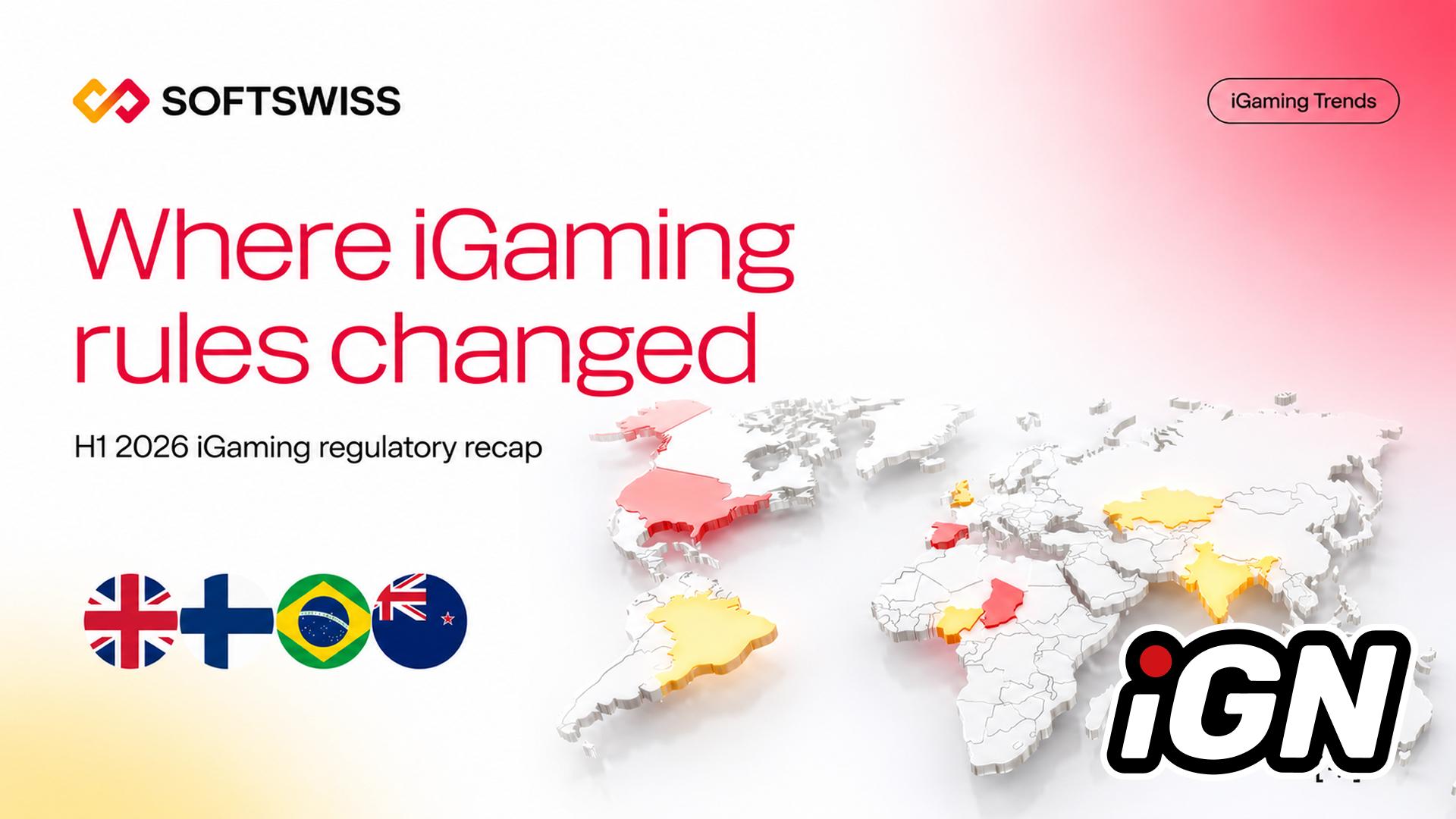
SOFTSWISS has released an overview of regulatory changes that came into effect from January 1 to June 30, 2026. Among the key trends identified by the authors are the emergence of new licensed markets, a sharp increase in taxes, and a shift in regulators' focus towards payments, advertising, and player protection. Here are the key details highlighted by iGN:
Taxes:
- Mexico: The IEPS rate has increased from 30% to 50% as of January 1. Local operators now pay tax on GGR, while foreign operators without a local presence are taxed on the total revenue.
- Colombia: A 16% consumer tax has been introduced, calculated from GGR for the reporting period and charged at the moment of the player's deposit.
- Netherlands: The gambling tax rate has risen from 34.2% to 37.8% as of January 1.
- United Kingdom: As of April 1, the Remote Gaming Duty on online casino profits has increased from 21% to 40%, and from April 2027, the rate on online betting will rise from 15% to 25%.
New Markets:
- Finland: Applications for online licenses opened on March 1, with a fee of €29,000. The regulated market will begin operations on July 1, 2027, with a tax rate of 22% on GGR.
- Ireland: The GRAI regulator opened applications on February 9, with the first online betting licenses coming into effect on July 1.
- New Zealand: The online casino licensing law has been in effect since May 1, allowing the regulator to issue up to 15 branded licenses for up to three years, with the regulated market starting on December 1.
- Alberta: Private operators can start operations from July 13 after registering with AGLC and signing an agreement with the Alberta iGaming Corporation.
Oversight and Legal Disputes:
- Malta: The local Article 56A, which allows non-compliance with foreign court decisions against operators with a Maltese license, was deemed contradictory to EU rules by the EU Court's Advocate General on April 23, although a final decision is still pending.
- Brazil: A decree from June 19 allows the SPA regulator to require banks and payment providers to block accounts of illegal operators.
- India: The PROG Act, effective May 1, imposes a complete ban on online real-money gaming, including advertising and promotion, and mandates banks and payment systems not to process related transactions.
- Kenya: Operators are required to implement geolocation, real-time monitoring via the regulator's API, and store player data on local servers.
- Sweden: As of May 1, financing gambling through credit funds is prohibited, and new rules for connecting to the national self-exclusion register Spelpaus took effect on August 1.
In the USA, the CFTC filed lawsuits on April 2 against Arizona, Connecticut, and Illinois, followed by New York and Wisconsin, insisting that event outcome contracts are regulated by federal commodity market law rather than state gambling laws. In Chile, a bill for online betting licensing received expedited status but remained unpassed by the end of June.