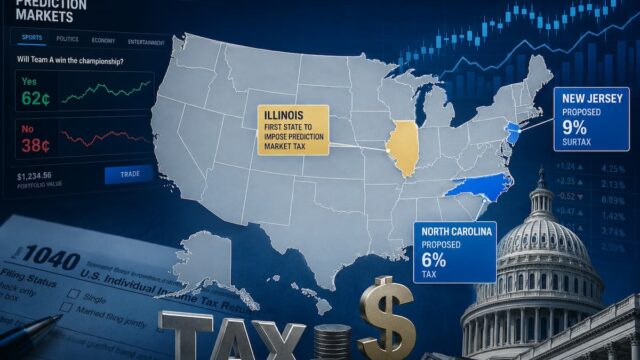
Lawmakers in North Carolina are progressing towards implementing a tax on prediction markets as part of a larger gambling tax initiative. Simultaneously, New Jersey has advanced a proposal to introduce a new surcharge for operators of these markets.
With more states exploring taxation on prediction markets as a revenue source, North Carolina and New Jersey are following Illinois, which recently became the first state to impose a tax on federally regulated platforms.
On July 1, North Carolina legislators approved a conference committee budget report that includes a 6% tax on the net trading fee revenue of prediction market operators for transactions occurring within the state. Unlike Illinois, however, this proposal does not create a state licensing or regulatory framework for these markets. Instead, platforms like Kalshi will continue to operate under the oversight of the CFTC while being subject to state taxes.
In addition to the prediction market tax, the budget also increases the online sports betting tax in North Carolina from 18% to 23%. This aligns the state with others such as Illinois, Maryland, Louisiana, and New Jersey, which have recently raised their sportsbook tax rates.
Furthermore, lawmakers have included a provision allowing taxpayers to deduct gambling losses on their North Carolina income tax returns. Currently, North Carolina is one of only ten states that do not permit such deductions.
Additionally, Senate Bill 595 was recently approved, which mandates sportsbooks to report information to the Department of Revenue regarding registered players who won at least $2,000 in the previous calendar year.
The budget report now awaits a third reading in both legislative chambers before being sent to Governor Josh Stein. If passed, North Carolina would become the second state, following Illinois, to impose a tax on prediction markets.
Meanwhile, New Jersey's lawmakers have revised their approach by significantly amending companion bills in both legislative chambers that initially aimed to regulate prediction markets similarly to sportsbooks. On June 28, the Senate Budget and Appropriations Committee adopted a substitute version of Senate Bill 4447, while the Assembly Budget Committee advanced Assembly Bill 5336. These amendments impose a 9% surtax on income generated from operating prediction markets.
The original bills proposed a regulatory framework for prediction markets akin to that of licensed sportsbooks in New Jersey, requiring operators to obtain licenses and comply with responsible gambling regulations. However, these provisions were removed in the committee substitute, focusing primarily on the taxation aspect.
This revised proposal follows Kalshi's successful preliminary injunction against New Jersey regulators in April, where the Third Circuit indicated that the Commodity Exchange Act likely grants the CFTC exclusive jurisdiction over federally listed event contracts. The legal proceedings are still ongoing.