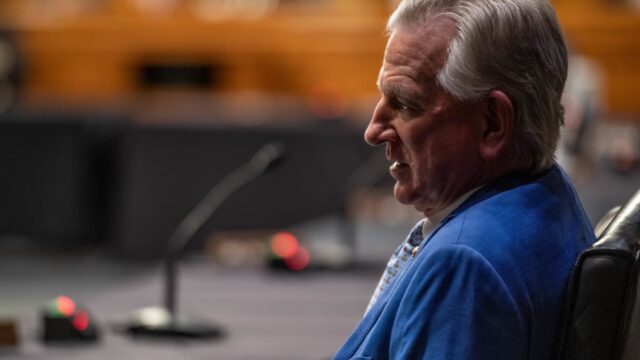
Senator Tommy Tuberville, who is also a candidate for Alabama Governor, has recently received $40,000 in campaign contributions from gambling entities, as political spending related to gambling intensifies in Alabama ahead of a possible expansion.
According to campaign finance disclosures, Tuberville secured $30,000 from VGW on March 31 and an additional $10,000 from Big Easy Casino on February 28. These contributions come at a crucial time, as Tuberville is seen as a leading contender for the Republican nomination in a state where efforts to legalize a lottery, casinos, and sports betting have repeatedly faltered despite various legislative attempts.
The financial support for Tuberville indicates a rise in political contributions linked to gambling interests in Alabama, as industry-related political action committees (PACs) prepare for a potential push to expand gambling options in the state.
VGW is recognized as one of the largest operators of sweepstakes casinos, a sector that remains largely unregulated in many parts of the U.S. Their brands include Chumba Casino, LuckyLand Slots, and Global Poker. The focus on sweepstakes casinos has intensified among lawmakers, with states like Indiana and Maine already implementing bans on these platforms.
In Alabama, scrutiny over gambling extends beyond legislative measures, with over 40 class-action lawsuits filed since early 2025, marking one of the highest totals in the nation. VGW is currently facing two active lawsuits and one that has been resolved.
Big Easy Casino, a racino located near Miami, is owned by billionaire Jeffrey Soffer. The contributions to Tuberville's campaign imply that the casino is aligning itself with a candidate who may influence Alabama's gambling laws in the future. Commercial casinos have been a frequent topic of debate regarding gambling expansion in the state.
Tuberville has previously stated that gambling policy should be determined by state lawmakers rather than the governor. He has expressed a willingness to consider a referendum, noting that the public has frequently brought up the topic, but emphasized that any proposal would need to be crafted by legislators.
He has acknowledged that Alabama is missing out on revenue due to neighboring states that offer lottery and gambling options, yet he has not fully endorsed a comprehensive expansion plan. Historically, gubernatorial support has not ensured legislative success; current Governor Kay Ivey has been in office since 2017 and endorsed a proposal for a lottery in 2024 that ultimately failed by a single vote in the Senate.
Alabama continues to be one of the few states in the U.S. without a state lottery, and numerous attempts to pass gambling legislation have not succeeded in the legislature. The closest the state came to allowing a referendum was in 2024, but a bill proposing a state lottery, commercial slots, and tribal casinos fell short by one vote.
As the 2026 election year approaches, future legislative sessions may significantly alter the political dynamics surrounding gambling expansion in Alabama.