A newly proposed bipartisan bill is set to allocate excise tax revenue towards a national study focused on the harms associated with sports betting and the implications for public policy.
Since the US Supreme Court lifted the federal ban on sports betting in 2018, the number of Americans legally participating in gambling has surged. However, there remains no federal agency tasked with examining the consequences of this expansion. The recently introduced legislation seeks to address this gap.
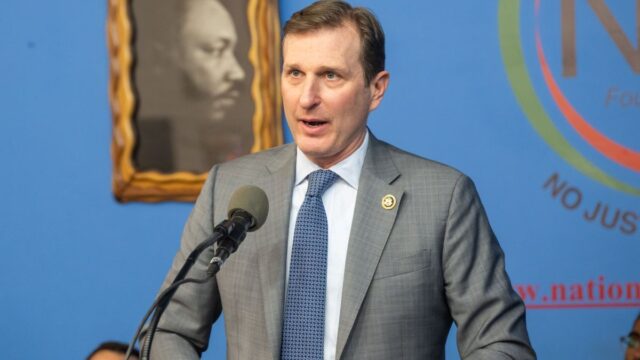
On June 4, Representatives Blake Moore (R-UT) and Dan Goldman (D-NY) presented the Gambling Disorder Health Study Act, which represents a significant Congressional initiative aimed at regulating the industry at the federal level.
This bipartisan measure would mandate the federal government to conduct an extensive, multi-year study investigating the origins, progression, and lasting impacts of gambling disorders. Additionally, it would assess the success of various prevention, treatment, and intervention methods. To finance this initiative, the bill proposes allocating 10% of federal excise tax revenue from state-sanctioned wagers for a period of up to three fiscal years. Similar proposals have been made in Congress to dedicate portions of excise tax to gambling-related projects.
In a statement, Rep. Moore described the recent rise in sports betting as a crisis, emphasizing the need for a thorough examination of gambling addiction: “We are witnessing a new era of gambling addiction as sports betting and prediction markets have infiltrated every facet of life. It is crucial for lawmakers and all Americans to delve deeper into the causes and consequences of gambling addiction to formulate effective solutions. This bill will significantly aid in tackling this crisis.”
Rep. Goldman supported Moore's sentiments, stating, “Gambling addiction is an escalating public health issue, particularly among young men, and it is imperative that the federal government begins to address it seriously. This bipartisan legislation is a sensible first step in comprehending the full ramifications of the apps and websites that have made gambling so easily accessible; it aims to identify those most vulnerable to addiction and develop intervention strategies akin to those used for other addictions. Congress must take a more proactive stance in combating gambling addiction and pass this bill.”
The release highlights that gambling addiction in the US has become a “significant public health concern,” worsened by the swift rise of legalized sports betting following the repeal of PASPA.
By 2025, the number of states with legal sports betting is projected to increase from just one in 2017 to 39, along with Washington, D.C., and Puerto Rico. Since 2018, Americans have wagered a staggering $668 billion on legal sports bets, according to MarketWatch data.
Recent findings from the Siena Research Institute and St. Bonaventure’s Jandoli School of Communication reveal that 27% of Americans report having an active account with an online sportsbook, with over half of men aged 18 to 49 indicating the same. Furthermore, the study noted that 33% of men in this age bracket have utilized a prediction market to place sports bets.
Moore and Goldman also pointed out that internet searches for help with gambling addiction have surged by 23% since 2018. They estimate that around 2-3% of the US population meets the criteria for gambling disorder. Despite these alarming trends, they argue that gambling addiction has not received the same level of federal focus as other forms of addiction.