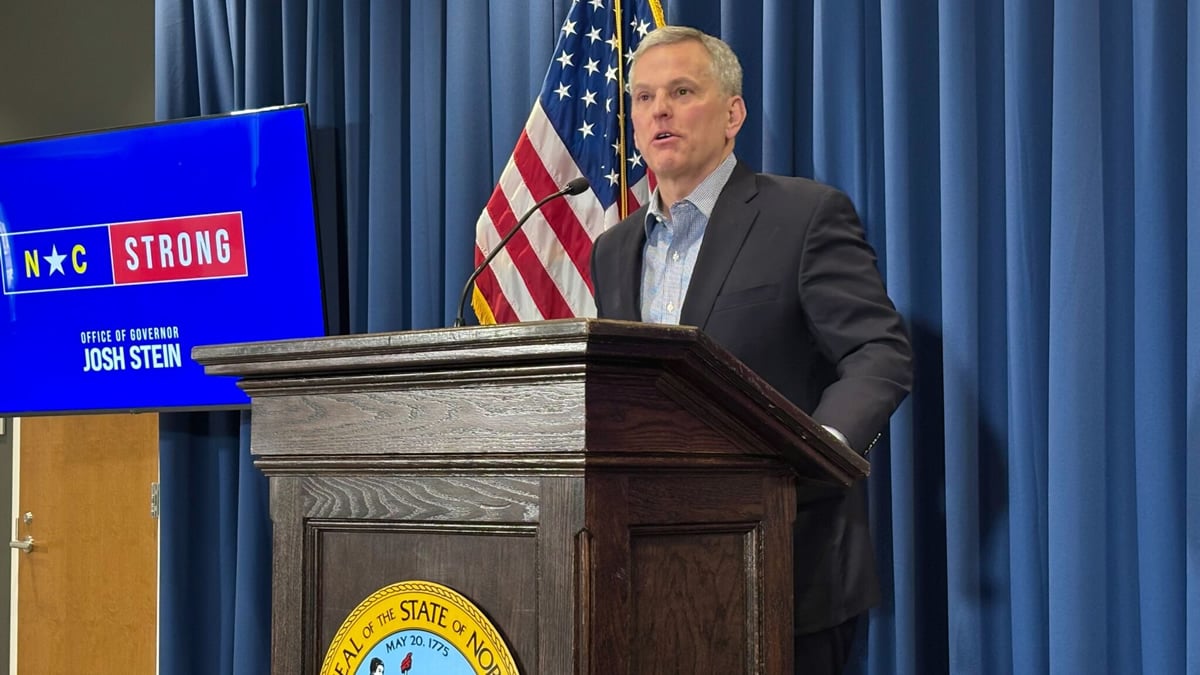
On Tuesday, North Carolina Governor Josh Stein officially signed the state's budget for fiscal year 2025-26, which amounts to $34 billion. This budget includes an increase in the tax rate for online sports betting and introduces a separate tax for prediction market platforms.
Governor Stein stated, "After careful deliberation, this morning I will sign the state budget into law." The newly enacted Senate Bill 257 raises the tax on online sports betting operators from 18% to 23% of their gross wagering revenue, effective immediately. This change affects the seven online sportsbooks operating in the state and marks the first tax increase since the legalization of sports betting in North Carolina in March 2024. With this new rate, North Carolina surpasses larger sports betting states such as Massachusetts, Ohio, and New Jersey.
The decision to increase the tax followed months of discussions. In April 2025, the state Senate had proposed a more significant hike to 36%, which would have positioned North Carolina among the top five states with the highest flat sports betting tax rates in the U.S. However, this proposal did not gain traction, and lawmakers eventually settled on a smaller increase, ultimately agreeing on the 23% rate.
The budget passed the House of Representatives with a vote of 88-21 and later received Senate approval with a 35-10 vote on the same day. Major sports betting operators like FanDuel and DraftKings opposed the tax increase, while lawmakers viewed it as a necessary step to address a $2.8 billion budget deficit.
Under the previous 18% tax rate, North Carolina bettors contributed over $300 million in tax revenue. The budget also modifies the distribution of sports betting proceeds. Starting in July 2027, both the University of North Carolina at Chapel Hill and North Carolina State University will be eligible to receive a share of these tax proceeds. NC State has an enrollment of 37,300 students, while UNC Chapel Hill has 32,200, making them the two largest universities in the state.
Institutions within the UNC System currently receive annual payments from sports betting tax revenue and may also receive 20% of any remaining tax revenue after state allocations. The budget initially caps annual payments to each institution at $2.9 million, but it also provides additional funding for select schools.
Additionally, revenue will be allocated to youth sports programs, gambling addiction treatment initiatives, and the state's general fund. The budget sets a cap of $30 million annually for the Major Events, Games, and Attractions Fund, which is below the projected $45.3 million for fiscal year 2026-27, as per the May 2026 Consensus Revenue Forecast.
Furthermore, North Carolina plans to impose a 6% tax on prediction markets, including platforms like Kalshi and Polymarket, starting January 1, 2027. A fiscal memo estimates that this tax will generate $2 million in revenue in its first year.
Importantly, the budget does not introduce any licensing, registration, or regulatory requirements for prediction markets, allowing trading exchanges that offer sports contracts to function without state oversight.
North Carolina joins Kentucky and Illinois in implementing tax legislation for prediction markets, although similar initiatives have faced legal challenges involving prediction market platforms and the Commodity Futures Trading Commission.