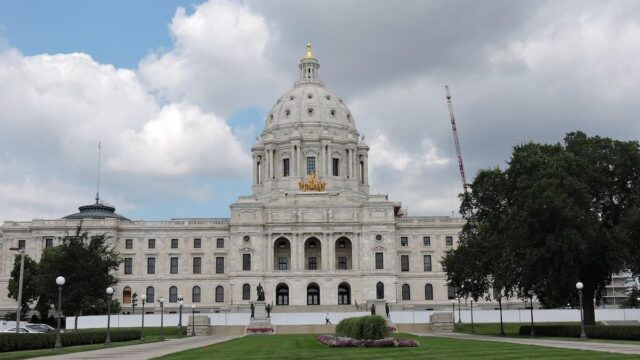
The Minnesota legislature has approved a comprehensive public safety bill, SF 4760, which imposes significant restrictions on prediction markets. This legislation could ignite further legal disputes involving states, the Commodity Futures Trading Commission (CFTC), and operators of prediction markets.
Initially, the bill did not address prediction markets, but the Senate had previously passed a separate measure targeting these markets earlier in the session. The House later amended SF 4760 to include provisions related to prediction markets before it was passed.
Upon its return to the Senate, lawmakers did not agree with the House's amendments, leading to the formation of a conference committee. Last Friday, this committee reached a compromise that maintained the ban on prediction markets, allowing the bill to be sent back to both chambers for final approval. The Senate subsequently approved the amended bill with a vote of 57-9, while the House supported it with a 100-32 vote.
Under the new legislation, a “prediction market” is defined as a system enabling consumers to wager on the outcomes of specific events that are not influenced by the actions of the parties involved in the contract. This includes wagers related to sports events, elections, public health crises, wars, and even cultural phenomena.
The law stipulates that individuals involved in creating, managing, or facilitating prediction markets could face felony charges. This includes those providing geolocation, payment processing, and other supporting services. Additionally, advertising prediction markets is now criminalized.
Furthermore, the bill amends existing Minnesota gambling laws to clarify that commodity and securities contracts are exempt from gambling regulations, except for the newly established prediction market prohibition. It also empowers regulators to issue cease-and-desist orders and seek injunctions against violations of these provisions, which are set to take effect on August 1, 2026.
If enacted, Minnesota may find itself embroiled in the escalating national legal disputes surrounding prediction markets. The CFTC has already initiated lawsuits against several states, including Arizona and New York, following enforcement actions against prediction market operators. The agency contends that federal law gives it exclusive authority over event contracts.
Operators like Kalshi have also responded with lawsuits against states attempting to restrict sports event contracts. Recent reports indicate that the CFTC is closely watching developments in Minnesota and may consider legal action. During discussions on the bill, lawmakers acknowledged the likelihood of litigation, with Senate Minority Leader Mark Johnson (R) suggesting that a lawsuit was nearly inevitable.