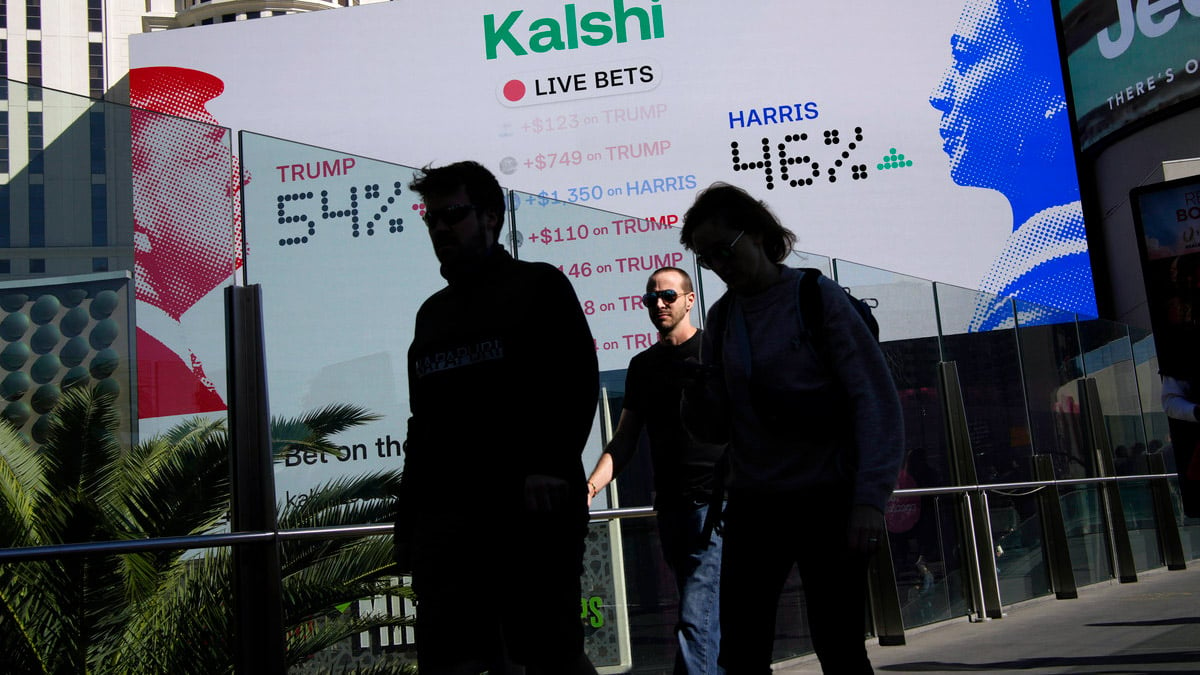
The Massachusetts Supreme Judicial Court expressed skepticism towards Kalshi, a prediction markets operator, during oral arguments on Monday. The court is deliberating whether Kalshi can legally provide sports-event contracts within the state, a decision that could influence the national conversation regarding the regulation of such platforms.
The core of the dispute revolves around whether Kalshi’s contracts are governed by federal regulations from the Commodity Futures Trading Commission (CFTC) or if they fall under state gambling laws. Kalshi maintains that its offerings are derivatives, specifically “swaps,” which are regulated by the Dodd-Frank Act of 2010, thus placing them outside the jurisdiction of state regulators.
Kalshi’s attorney, Grant Mainland, emphasized to the court that this matter is fundamentally a federal regulatory issue. He urged the justices to lift a preliminary injunction that currently prevents the company from offering sports-event contracts in Massachusetts without a gaming license.
However, several justices raised concerns about how Kalshi’s products differ from conventional sports betting. Justice Gabrielle Wolohojian questioned, “In what way do they differentiate from what would colloquially be known as a bet?” Similarly, Justice Scott L. Kafker expressed skepticism, stating, “If you want to gamble on a game, this is one way of doing it, right? This does seem to have a major aspect of sports gambling to it.”
The state of Massachusetts, represented by Attorney General Andrea Joy Campbell, argues that Kalshi is effectively providing sports betting services without the necessary license, thereby undermining state authority over gambling regulations.
Assistant Attorney General Gerard Cedrone warned the court that accepting Kalshi’s stance would effectively eliminate state regulation over what is fundamentally a sports bet, potentially leading to significant changes in gaming oversight.
Kalshi has pointed to support from the CFTC and a recent ruling by the U.S. Court of Appeals for the Third Circuit, which affirmed the federal regulator's authority in a related case involving New Jersey.
Nonetheless, the Massachusetts court expressed concern that Congress did not intend to remove states from their traditional regulatory roles when it enacted the Dodd-Frank Act following the 2008 financial crisis.
This case is part of a larger nationwide legal struggle as prediction markets expand, allowing users to speculate on the outcomes of various events, including sports and elections. State regulators argue that these platforms pose risks by circumventing consumer protections and age restrictions associated with licensed betting.
A preliminary injunction preventing Kalshi from operating in Massachusetts remains in place while the appeal is pending. If the ruling is upheld, it could bolster state authority over prediction markets and pave the way for further litigation, possibly reaching the U.S. Supreme Court.
Attorney General Campbell has framed this case as part of a broader initiative by states to fill oversight gaps. “As the federal government steps away from consumer protection, state AGs have stepped up, as evidenced by my office’s ongoing lawsuit against Kalshi,” she stated. “We will continue to ensure that anyone who wants to offer sports betting in Massachusetts is licensed and proactively addresses any risks of fraud and the significant public health consequences that often accompany sports betting,” Campbell added.