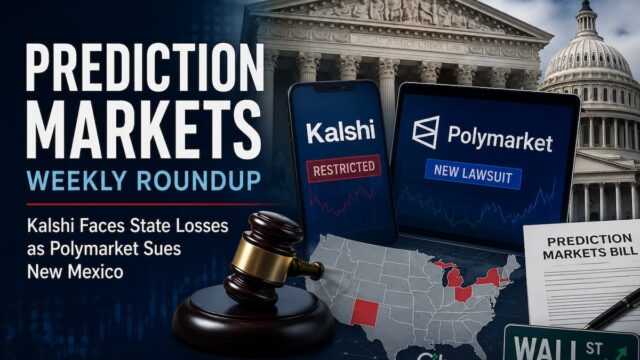
This week has been particularly eventful for the prediction market industry, with Kalshi encountering new legal hurdles in Michigan and Nevada, while Polymarket initiated legal action against New Mexico. Concurrently, North Carolina is on the verge of becoming the second state to impose taxes on prediction markets, and federal legislators have introduced a new bill aimed at regulating political event contracts.
Litigation Escalates Across Several States
A Michigan judge has issued a temporary restraining order against Kalshi, mandating the prediction exchange to cease offering contracts related to sports events within the state. This ruling stems from a lawsuit filed by Attorney General Dana Nessel, with Judge Rosemarie Aquilina warning that daily fines could be imposed if Kalshi fails to adhere to geolocation regulations. With this ruling, Michigan joins Nevada and Massachusetts as the third state to impose an injunction against Kalshi.
Meanwhile, Polymarket has entered the fray in New Mexico, suing Attorney General Raúl Torrez and state gaming officials in federal court. The lawsuit contends that New Mexico's legal actions against Kalshi, combined with the state’s refusal to postpone enforcement, pose an immediate threat to Polymarket.
In Nevada, Kalshi faced another setback when the state’s Supreme Court rejected its emergency motion for a stay pending appeal. A hearing is set for July 16 to discuss why Kalshi did not comply with geofencing requirements after Nevada's preliminary injunction and to determine if the company should be held in contempt for potentially violating the order.
In Ohio, Kalshi has initiated legal action against the Ohio Casino Control Commission in state court, aiming to halt administrative proceedings that seek a $5 million civil penalty. The commission has accused Kalshi of conducting unlicensed sports betting, while Kalshi asserts that the proceedings improperly target federally regulated event contracts. This lawsuit is the latest development in Kalshi's ongoing conflict with Ohio, which began in 2025 following a cease-and-desist letter from regulators.
In New Jersey, the sports prediction market battle has advanced toward the U.S. Supreme Court. Justice Samuel Alito has granted New Jersey until August 4 to submit a petition challenging Kalshi’s Third Circuit victory against the state. This filing could provide the Supreme Court with its first chance to determine whether the Commodity Exchange Act supersedes state gambling laws regarding sports-event contracts.
Massachusetts has also intensified its lawsuit against Kalshi, with a judge permitting the attorney general to file an amended complaint. This revised lawsuit includes additional claims related to Kalshi's marketing practices and its accessibility to users under 21, while continuing to assert that the platform is facilitating illegal sports betting.
Lastly, Kalshi and Polymarket have appeared in federal court to challenge Minnesota’s pioneering law that bans prediction market platforms before it goes into effect on August 1. Minnesota officials argue that the law is a necessary exercise of their “police powers” to safeguard public health and welfare, claiming it aligns with existing statutes that prohibit unlicensed gambling.