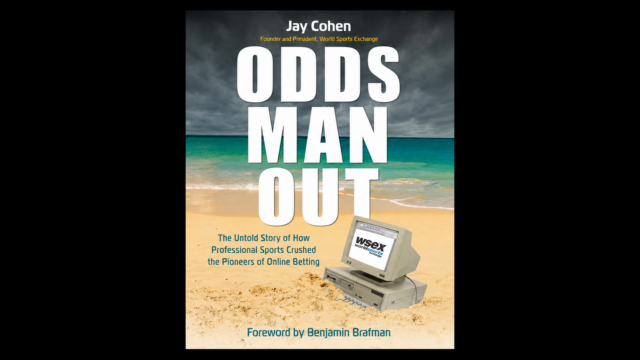
In his newly released autobiography, Jay Cohen, co-founder of a sportsbook based in Antigua, shares his perspective on what he perceives as a grave injustice driven by professional sports leagues that resulted in his prosecution.
Titled Odds Man Out, the memoir offers a candid look at Cohen's grievances stemming from his experiences. He still feels the impact of his conviction, which he attributes to a biased judicial system that made him the first offshore sportsbook owner prosecuted under the 1961 Federal Wire Act, even after 26 years.
With Caribbean sportsbooks continuing to serve American bettors amid growing legal scrutiny from the U.S., and the rise of new online gambling formats like prediction markets, Cohen's narrative resonates both historically and in contemporary discussions. His story revolves around a visionary who believed he was operating within the law, only to discover that those in power had a different opinion—and ultimately prevailed.
Cohen's journey began as a Long Island native who earned a nuclear engineering degree from Cal-Berkeley, later transitioning to a stock trader on the Pacific Stock Exchange. By the late 1990s, he had established himself as a pioneer in the online sportsbook industry, only to face the harsh reality of a federal conviction that led to 21 months in prison.
In Odds Man Out, Cohen elaborates on the complexities of his situation. After being indicted in 1998, he made the decision to return to the U.S. from Antigua, where his business, World Sports Exchange, was located, to defend himself in court. He was confident, based on legal counsel and his understanding of federal law, that his operations were legitimate. However, he faced significant challenges from a law firm representing professional sports leagues, which had previously attempted to shut him down, and a conflict of interest with the Department of Justice that ultimately led to his prosecution.
Cohen asserts that the presiding judge, Thomas Griesa, was biased, claiming that he hindered the introduction of evidence that could have provided the jury with a more comprehensive understanding of the case.
Reflecting on the early days of online betting, Cohen and his late business partner, Steve Schillinger, were innovators who introduced features like in-game betting and point-and-click wagering, which are now standard in the industry. Despite their contributions, Cohen feels that they were ahead of their time, a sentiment echoed by industry figures like Roxy Roxborough, who have attempted to highlight Cohen's vision despite the stigma from his conviction.
“We believed it was the right time,” Cohen stated in an interview. “We didn’t think we were early; we thought we were doing everything correctly, and our customers appreciated it. Unfortunately, we were taken down by the powers that be. Ironically, those who once raised moral objections, particularly the sports leagues, seem to have abandoned those concerns today.”
Cohen launched WSEX in Antigua in 1995, reassured by his legal team that servicing U.S. bettors was permissible under existing laws, well before the repeal of the Professional and Amateur Sports Protection Act. The business thrived, gaining positive media attention from outlets like HBO Real Sports, the Wall Street Journal, and 60 Minutes, which seemed to validate Cohen's approach.