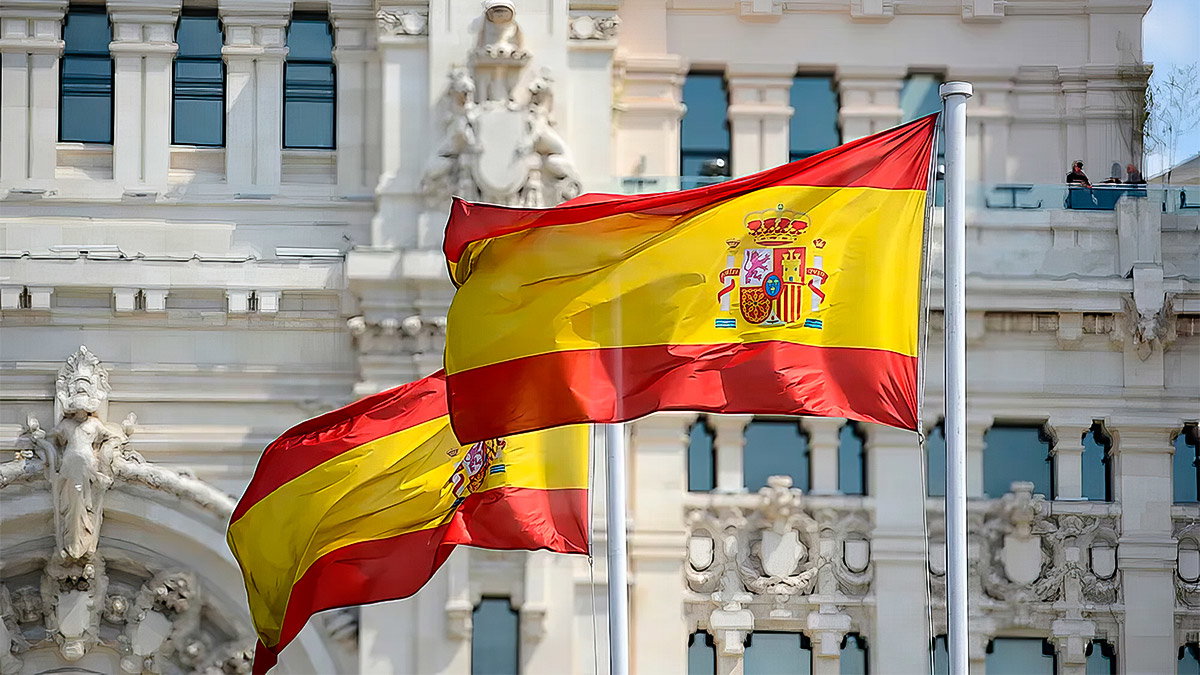
The Spanish government has taken steps to restrict access to prediction market platforms Polymarket and Kalshi while an investigation is underway to determine if these companies have been operating without the necessary gambling licenses.
This decision was made public by Spain’s Ministry of Consumer Rights and announced in the Official State Gazette. The ministry confirmed that its gambling regulatory body, the Dirección General de Ordenación del Juego (DGOJ), has initiated sanctioning procedures against the two US-based platforms for allegedly providing services in Spain without the required administrative approvals as mandated by national gambling regulations.
The temporary ban is expected to last between three to four months while the inquiry is conducted. Spanish authorities have directed internet service providers to limit access to these platforms, and users attempting to reach them will receive warnings indicating they are trying to access an unlicensed gambling site.
Officials noted that previous attempts to inform the companies at their known foreign addresses were unsuccessful, prompting regulators to issue formal notifications through the state gazette.
The DGOJ stated that prediction markets are classified under Spain’s gambling regulations since they involve “placing bets on uncertain future outcomes.” Consequently, operators offering such services are required to obtain specific licenses to operate within the country.
Authorities emphasized that unauthorized operators lack several consumer protections mandated by Spanish law. These protections include identity verification systems, measures to prevent access by minors, and protocols for self-excluded or banned gamblers, among other oversight mechanisms designed to safeguard consumers.
Polymarket and Kalshi enable users to trade on the outcomes of future events rather than traditional sports or casino bets. The markets available on these platforms have included topics such as elections, geopolitical events, economic developments, and changes in political leadership.
Recent market examples have featured questions about whether Spanish Prime Minister Pedro Sánchez would resign early and which global political leaders might leave their positions within the year.
This action by Spain adds to a growing list of European nations that have taken measures against prediction market operators. In 2024, Polymarket was blocked in France after authorities deemed its operations likely incompatible with French law. Other European countries that have restricted access to the platform include Germany, Belgium, Portugal, Switzerland, Romania, the Netherlands, and Poland.
Conversely, some jurisdictions are considering regulatory frameworks instead of outright bans. Malta has publicly announced its intention to explore the prediction market sector and potential regulatory approaches. Earlier this year, Gibraltar issued a license to its first prediction market operator.
The varying approaches highlight an ongoing debate across Europe regarding the classification of prediction markets. While some regulators categorize them as gambling products due to the nature of betting on uncertain future outcomes, others are still evaluating whether they fit within financial market, securities, or commodities regulations.
Prediction markets have rapidly evolved from a niche online activity into a multibillion-dollar industry, particularly gaining attention during the 2024 US presidential election cycle.
This growth has led to increased regulatory scrutiny, with authorities examining licensing requirements, consumer protection standards, and the legal classification of contracts related to future events.
Once Spain's investigation concludes, Polymarket and Kalshi may seek local licensing, challenge the regulatory classifications applied to their services, or adjust their offerings to meet Spanish legal requirements. A final decision is anticipated within the next three to four months.