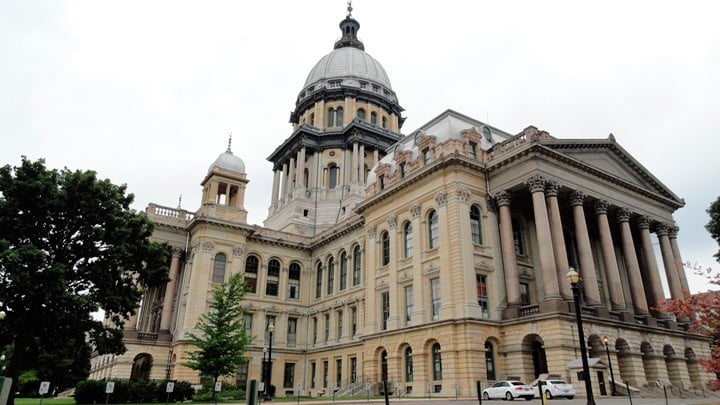
On Monday, Illinois legislators greenlit a fiscal budget for 2027 totaling $55.9 billion, which introduces fresh taxes targeting cryptocurrency transactions, fantasy sports operators, and prediction market sports betting. This decision comes amid worries about potential cuts to federal funding while ensuring continued support for social programs.
The budget, which aligns with a similar projected revenue amount, was passed following extensive overnight negotiations and garnered support from Democratic lawmakers. This reflects the ongoing partisan divide over fiscal strategies within the Democratic-majority legislature.
Included in the budget are over $800 million in new revenue initiatives, such as taxes on social media companies, digital assets, fantasy sports, remote tobacco sellers, and digital advertising services. Additionally, it implements a freeze on corporate net operating loss deductions, a move initially proposed by Democratic Governor JB Pritzker.
Democratic leaders assert that these new measures will help the state navigate economic uncertainties and possible declines in federal support without imposing additional tax burdens on working families. Senate Democrats' budget leader, Elgie Sims, emphasized the importance of being prepared for the challenges posed by federal cuts and the unpredictability from Washington.
A tax on social media firms is projected to yield approximately $200 million annually, while broader tax reforms suggested by Pritzker could potentially generate around $500 million. The taxation on digital asset transactions and fantasy sports is expected to bring in about $65 million.
Furthermore, Illinois plans to create a licensing framework for fantasy sports operators, imposing a 15% tax on the industry. Democratic Representative Curtis Tarver noted that this structure was a request from the industry itself.
However, Republicans voiced their discontent with both the proposed spending levels and the new taxes. Republican Representative Blaine Wilhour criticized the state’s tendency to overspend, stating, “This state is addicted to spending money it doesn't have.” He added that it continually creates unaffordable programs and makes promises it cannot fulfill, frequently turning to taxpayers to resolve the financial mess.
In addition, lawmakers have been deliberating for weeks on how to effectively tax prediction markets. They discussed the regulation and taxation of these platforms, although the authority of states to regulate them is currently under scrutiny due to a federal lawsuit involving Illinois and other jurisdictions. Concerns were also raised regarding the operations of prediction markets, highlighting risks such as insider trading, low minimum age requirements, and the variety of events available for trading.