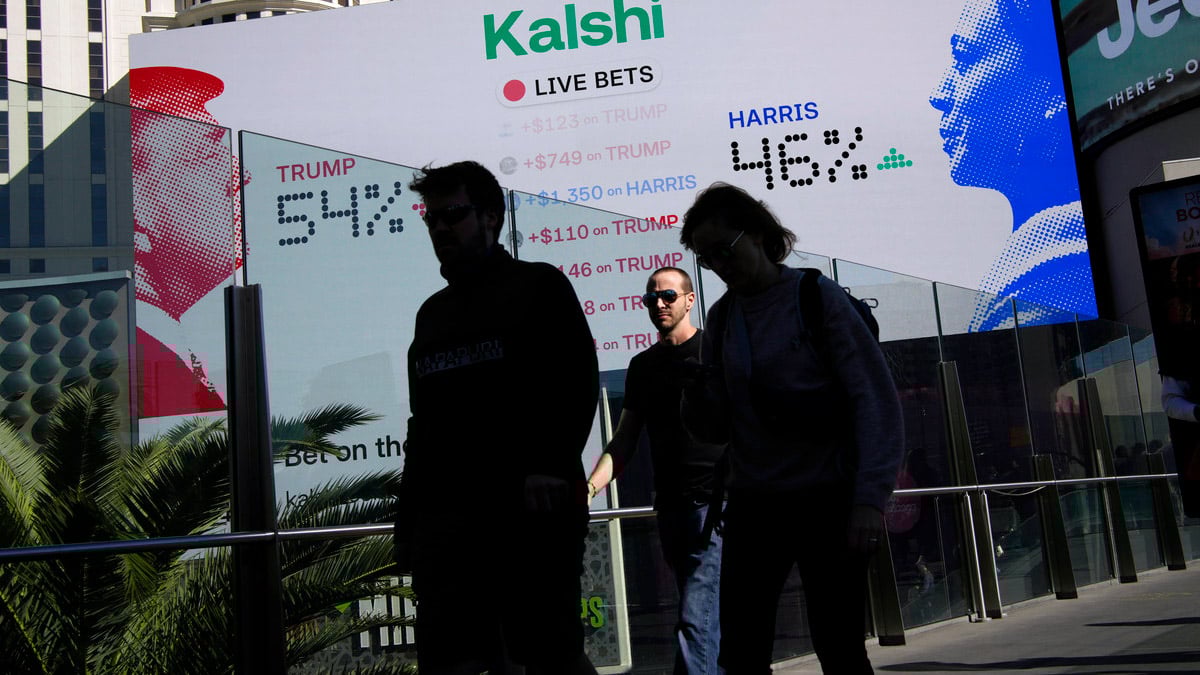
A federal judge in the United States has dismissed an attempt by prediction market operator Kalshi to stop its criminal prosecution in Arizona, adding another chapter to the ongoing legal dispute regarding event-based trading platforms.
The court rejected Kalshi's plea to dismiss the case and did not make a determination on whether federal law supersedes Arizona's gambling regulations. U.S. District Judge Michael Liburdi stated on Wednesday that it was premature to address that matter.
The Arizona Attorney General's Office has charged Kalshi with 20 misdemeanor offenses related to wagering, claiming the firm accepted bets on political events, college sports, and individual player performances.
According to state law, running an unlicensed wagering operation and betting on elections is prohibited, making this the first instance of a state filing criminal charges against such a platform.
This conflict highlights a larger debate about whether prediction markets should be classified as gambling entities. Arizona asserts that Kalshi is running an illegal betting operation within its borders and has promoted itself as a platform for sports and election betting, accusing the company of violating state laws.
Kalshi argues that it functions as a financial marketplace rather than a gambling entity, claiming that its users engage in trading contracts with each other instead of wagering against the house. The platform enables users to buy and sell contracts based on event outcomes, labeling these exchanges as “swaps.”
In addition to the criminal charges, Kalshi is also pursuing civil claims in federal court, advocating for regulation solely by the U.S. Commodity Futures Trading Commission. The company has expressed concerns that the Arizona case could jeopardize its operations, erode trust in its platform's integrity, and lead to additional complications for its business.
This Arizona case is part of a larger multi-state legal struggle. Kalshi has initiated lawsuits against Arizona, Utah, and Iowa to prevent state-level enforcement, while other states have also taken action against the platform.
Judicial outcomes have been varied thus far. Courts in Nevada and Massachusetts have supported states aiming to limit prediction market activities, while decisions in New Jersey and Tennessee have favored Kalshi.
The federal government has also become involved, filing lawsuits against Connecticut, Arizona, and Illinois to contest their attempts to regulate prediction market operators. The Trump administration has shown support for such platforms.
The situation is further complicated by political and commercial connections, as Donald Trump's eldest son serves as an advisor to both Kalshi and Polymarket, and has invested in the latter. Additionally, Trump's social media platform is set to launch a cryptocurrency-based prediction market named Truth Predict.