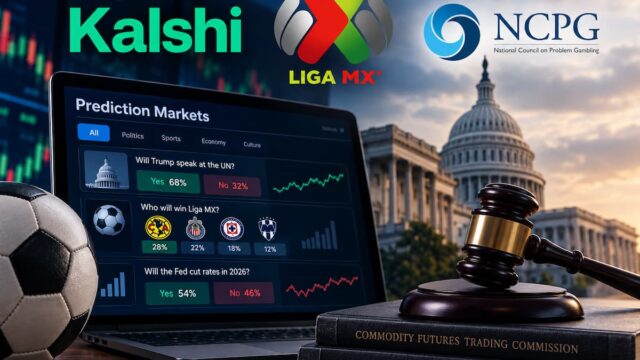
The Commodity Futures Trading Commission (CFTC) has issued a warning regarding the potential for manipulation in prediction markets that are linked to the actions or statements of public figures. This advisory highlights that these increasingly popular contracts may be particularly susceptible to manipulation.
In a recent statement, the CFTC's Division of Market Oversight noted that certain 'mention markets' could be influenced by a single individual or a small group, thereby raising concerns about their integrity. These markets include bets on whether a specific word or phrase will be used during a speech or whether a public figure will attend an event.
Unlike traditional event contracts, which are based on independently verifiable outcomes like economic indicators or election results, mention markets rely on the actions of named individuals, which may not be independently verifiable. Consequently, the CFTC has indicated that these markets may be 'presumptively readily susceptible to manipulation,' suggesting that exchanges could face stricter regulations when attempting to list such contracts.
While the advisory does not prohibit these contracts, it encourages exchanges to consult with the CFTC early in the design process to identify any potential manipulation risks and explore ways to mitigate them.
This warning follows a recent case where the CFTC ordered Gabriel Perez, a former teleprompter operator for the White House, to return over $107,000 in profits and pay a civil penalty for trading on President Trump Mention contracts.
In other news, the Mexican Football Federation has filed a lawsuit against Kalshi in New York, claiming that the prediction market operator has unlawfully used the Liga MX trademark and the names of its clubs. Despite previous cease-and-desist requests, Kalshi allegedly continued to use these marks, although the company contends its usage was limited to text identification within regulated markets.
Furthermore, Kalshi is currently involved in legal disputes in Wisconsin and Tennessee. The company is appealing a decision that allows the Ho-Chunk Nation to pursue claims against it under the Indian Gaming Regulatory Act, while also facing challenges related to a recent Ninth Circuit ruling that may impact its legal standing in ongoing litigation.