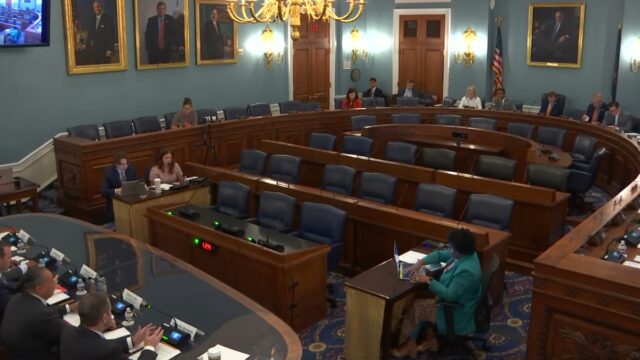
In a recent advisory, the U.S. Commodity Futures Trading Commission (CFTC) emphasized the importance of adhering to core principles when prediction market operators introduce new contracts. This advisory follows a House subcommittee hearing on prediction markets, which, while not resulting in immediate legislation, has sparked significant discussions.
The memo, issued by Duncan Hennes, the acting director of the CFTC's Division of Market Oversight, highlights concerns about operators submitting contract templates that vary across different markets. Such practices hinder the CFTC's ability to verify whether designated contract markets (DCMs) have provided all necessary information and have adequately assessed compliance with core principles.
In the memo, Hennes stated, “This practice hampers DMO’s ability to determine whether a DCM has supplied all information, explanation, and analysis required under Commission Regulation (section) 40.2.” He further noted that it restricts market participants from accessing vital information needed for evaluation.
This advisory comes after the CFTC reminded operators of their obligation to follow nearly twenty core principles outlined in the Commodity Exchange Act. These principles aim to ensure that contracts are not easily manipulated and that operators establish rules promoting fair trading.
During the House Agriculture Subcommittee hearing, Chris Cylke from the American Gaming Association urged Congress to restrict federally regulated prediction markets from self-certifying sports or casino-style gambling contracts. He argued that these markets do not meet the same protective standards as state-licensed sportsbooks.
In response, Carl Kennedy from Katten Muchin Rosenman LLP defended the self-certification process, asserting that it is not merely a formality. He explained that the CFTC has the authority to conduct a public interest review within ten days of a contract listing, which can take up to ninety days. If the contract fails to meet public interest standards, the CFTC can revoke it.
Kennedy, a proponent of sports contracts in prediction markets, acknowledged the concerns of commercial and tribal gambling interests but believes coexistence is possible. He compared it to the gold market, where multiple regulatory frameworks operate simultaneously without issues.
Concerns were also raised by U.S. Rep. Nikki Budzinski regarding the adequacy of information provided during the self-certification process, particularly for contracts influenced by a single individual. Robert Schwartz, a partner at Morgan, Lewis & Bockius, assured that the CFTC's proposed rules require comprehensive self-certifications that address risks, especially for single-actor contracts.