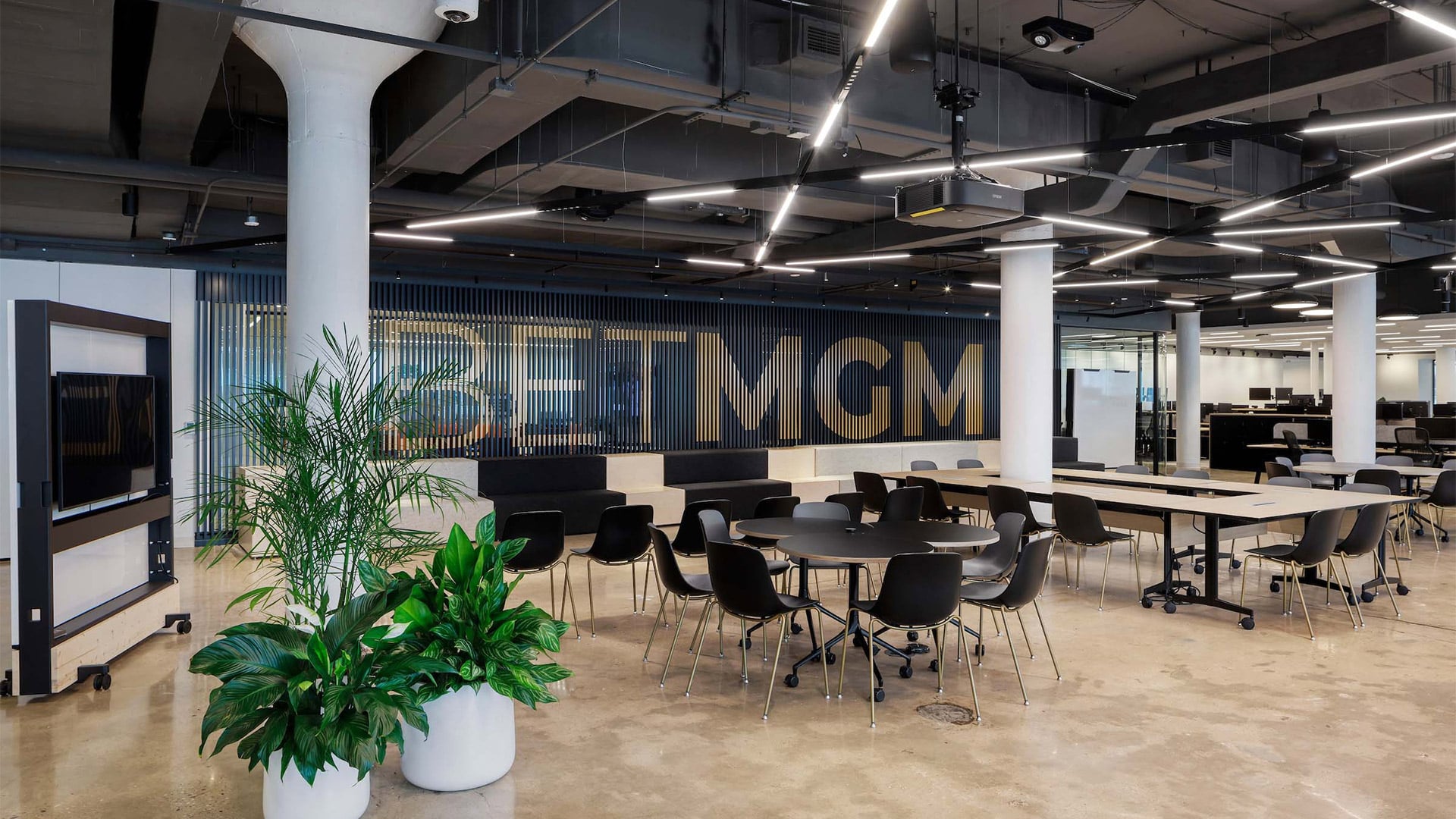
BetMGM has revised its revenue projections for 2026 downward following a weaker-than-anticipated first quarter in its online sports betting division. The company's management highlighted unfavorable betting outcomes and increasing competition in the U.S. market as key factors behind this adjustment.
Chief Financial Officer Gary Deutsch characterized the quarter as “bad results for the house,” noting that outcomes favorable to bettors led to higher payouts and squeezed profit margins. Although net revenue in the sports segment saw a 4% increase year-on-year, this growth was counterbalanced by elevated promotional expenses and adverse betting results.
Chief Executive Adam Greenblatt described the year's start as stable but falling short of expectations, attributing the performance to the same negative outcomes affecting the market.
BetMGM now anticipates full-year revenue to be between $2.9 billion and $3.1 billion, a decrease from its previous forecast of $3.1 billion to $3.2 billion. The adjusted core profit guidance remains unchanged at $300 million to $350 million, but expectations have shifted towards the lower end of this range.
This revision comes as the U.S. sports betting market continues to grow, aided by state-level legalization and ongoing marketing efforts from operators, despite increasing regulatory scrutiny and tax pressures.
In response, BetMGM is modifying its strategy by cutting marketing expenditures in states focused solely on online sports betting and concentrating on areas where it has a competitive edge. Part of this strategy involves targeting higher-value customers, with the company reporting a 23% increase in handle from active users, driven by a better player mix and fewer low-value participants.
Management noted that premium customers have remained stable despite the growing competition, with enhanced engagement observed among top-tier clients in both sports betting and iGaming.
Customer acquisition costs have surged, which Greenblatt attributes to aggressive spending by new market entrants, whom he referred to as “new sports betting companies … they call themselves prediction markets.” He mentioned that BetMGM, along with 40 state attorneys general, is awaiting potential U.S. Supreme Court consideration of what it views as a states' rights issue concerning these platforms.
When asked about the competitive landscape, Greenblatt stated, “I don’t control what others choose to spend, underpinning bad investment. We’re controlling the controllable.” He suggested that the current expenditure levels in the sector are not sustainable in the long run and that market conditions are likely to normalize eventually. Greenblatt also expressed confidence that many customers attracted to competing platforms would return over time.
“The majority of these players will return to us,” he said, emphasizing product quality, customer service, and the integration of land-based rewards through MGM Resorts. “The value proposition is better for most players,” he added.
In the iGaming sector, BetMGM reported stronger-than-expected customer acquisition, albeit with higher costs, and remains optimistic about the long-term returns from these investments. Player engagement continues to be robust, with users active several days a week, and the company plans to broaden its content offerings, including well-known gaming franchises.
However, growth in iGaming has been limited due to the lack of new state launches since 2022. Greenblatt described the current competitive landscape as a market evolution and expressed cautious optimism regarding future expansion, including the possibility of legalization in Virginia by 2027.
He also pointed out uncertainties in Maine, where iGaming legislation could potentially be repealed through a public vote, although he indicated that the outcome would not significantly impact the company's outlook.
During the quarter, BetMGM paid $3 million in parent fees to Entain and MGM Resorts International, which management attributed to seasonal factors. The company continues to target generating $500 million in annual cash flow by 2027.