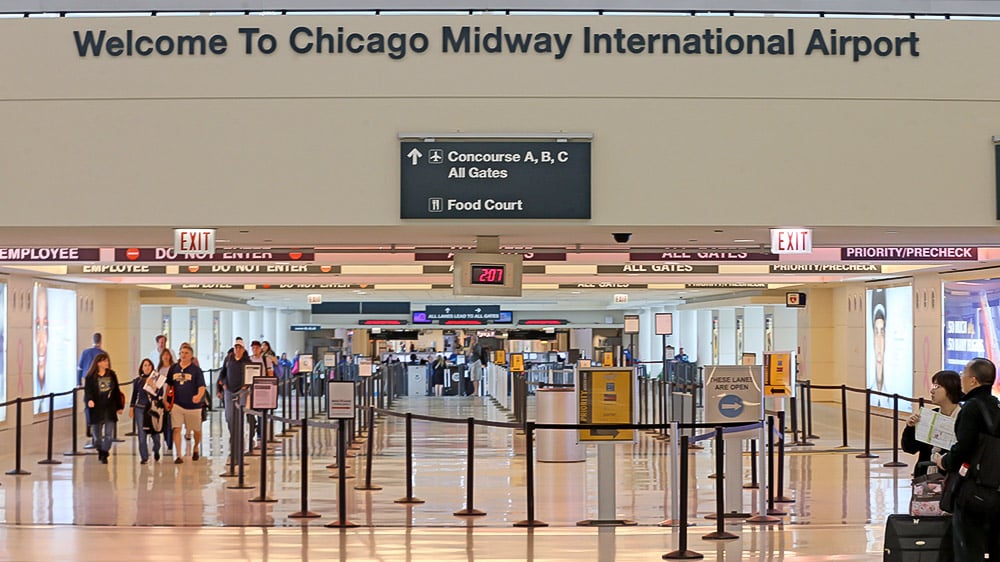
Bally's Corporation has suggested the establishment of slot machine lounges at both O'Hare and Midway airports in Chicago as a substitute for the proposed expansion of video gambling terminals (VGTs) throughout the city. This proposal has intensified an ongoing debate among city officials regarding gambling regulations and municipal revenue generation.
The idea was put forth during a recent hearing of the City Council's Workforce Development Committee, which was convened to examine the potential repeal of an ordinance that legalized VGTs in Chicago as part of the city's budget plan for 2026.
Christopher Jewett, Bally's Senior Vice President for Corporate Development, indicated that each of O'Hare's four terminals and Midway's single terminal could host a lounge dedicated to slot machines. He estimated that a single lounge could yield around $5 million in gaming and admission taxes directly benefiting the city. Jewett emphasized, “This alone can replace the revenue in question,” as reported by the Chicago Sun-Times.
Chicago's budget for 2026, amounting to $16.6 billion, anticipates generating $6.8 million from the licensing of newly legalized VGTs. This projection is based on an expectation that approximately 80% of the city's 3,300 eligible establishments will seek licenses, alongside a projected six-to-eight-month approval timeline from the Illinois Gaming Board.
However, Alderman Anthony Beale expressed skepticism about whether Bally's airport proposal could adequately address the anticipated revenue shortfall. He argued that the proceeds from airport gaming should be allocated to the enterprise fund that supports airport operations, rather than being diverted to the city's general budget.
Beale also criticized Bally's for not pursuing gaming opportunities at the airport that had previously been authorized by the Illinois General Assembly.
This discussion arises as Bally's continues to resist the expansion of video gambling in Chicago, cautioning that a broad rollout of VGTs could lead to a $74 million annual decrease in casino revenue and potentially result in the loss of up to 1,050 jobs at its temporary and planned permanent casino locations.
Moreover, the company has raised concerns that legalizing VGTs could necessitate a renegotiation of critical components of its host agreement with the city, potentially eliminating a $4 million annual payment from Bally's and diminishing the funding generated for police and fire pension funds.
Mayor Brandon Johnson has expressed his opposition to the expansion of video gambling, arguing that it could breach the city's host agreement with Bally's, which is currently operating a temporary casino while developing a permanent casino-entertainment venue in the River West area of Chicago.
Jewett pointed out that Bally's entered into the host agreement with the understanding that Chicago would uphold its long-standing ban on video gambling terminals. “Had we known that, within just a few years, this body would reverse course and allow an alternative form of gambling that breaches the agreement, we would never agree to the numerous commitments, all of which we've held up,” he stated.
The hearing concluded abruptly following a tense exchange between Beale and Ivan Capifali, the Commissioner of the Department of Business Affairs and Consumer Protection, regarding the city's management of sweepstakes gaming machines. Capifali refrained from discussing the machines during the hearing, asserting, “I am not going into gambling policy debates with you or anybody in this forum.”
In response, Beale called for Capifali's resignation, accusing him of not adequately addressing the matter.
This dispute highlighted the increasing tensions within the City Council over gambling policy, with advocates and opponents of VGT legalization becoming more polarized regarding how Chicago should balance revenue generation with protecting its casino investments. Alderman Debra Silverstein, Chair of the License Committee, also reiterated her criticism of the process, stating that any move to repeal the VGT ordinance should be reviewed by her committee, which initially approved the measure.