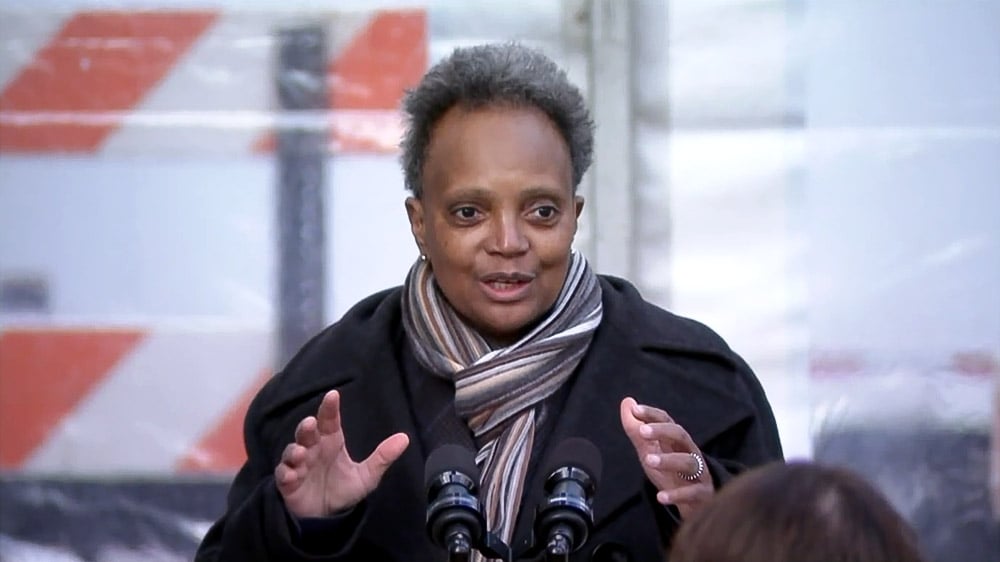
Bally’s has engaged the services of RKF Global PLLC, a firm where former Chicago Mayor Lori Lightfoot is a partner, as the company contemplates legal action regarding the city’s recent decision to legalize video gambling terminals. Bally’s argues that this decision could jeopardize its existing casino host agreement with Chicago.
This controversy arose following the Chicago City Council's approval of a $16.6 billion budget for 2026, which lifted a long-standing ban on video gambling and projected $6.8 million in revenue from licensing terminals throughout the city. Bally’s, which is in the process of establishing a permanent casino in River West, has expressed strong opposition to this legislative change.
In a statement, Bally’s expressed satisfaction with its team in Chicago, stating, “As we ramp up efforts to protect our investment in the city, we have also brought on the strategic counsel of RKF Global PLLC, where former Mayor Lightfoot is a partner.”
Lightfoot has yet to comment on her role in Bally’s potential legal challenge, which was initially reported by Crain’s Chicago Business. Her involvement has raised eyebrows, particularly since she negotiated the casino agreement during her tenure as mayor. David Greising, president and CEO of the Better Government Association, described her participation as “a pretty bald conflict of interest,” according to the Chicago Sun-Times.
Greising noted that the city’s ethics regulations seem to prevent a former mayor from advising a client on contracts for which they had significant managerial responsibility. Steven Berlin, executive director of the Chicago Board of Ethics, stated he could not comment specifically on Bally’s situation but mentioned that the ethics ordinance prohibits a former mayor from assisting a new client on matters they were substantially involved in for one year after leaving office.
Three years ago, Lightfoot secured City Council approval for Bally’s after the company committed to paying $40 million upfront to support police and fire pensions and to avoid a property tax increase before elections. This selection faced opposition from Aldermen Brian Hopkins and Brendan Reilly, who argued that Bally’s had no experience building a casino from scratch and that the planned $1.7 billion River West casino and entertainment complex would exacerbate traffic issues in an already congested area.
Hopkins and Reilly also accused Lightfoot of circumventing the City Council committee she established to evaluate the casino proposal. Additionally, Reilly raised concerns about the decision to use the historic Medinah Temple as Bally’s temporary casino site, warning it would increase traffic congestion and heighten crime concerns in River North.
Alderman Anthony Beale, a prominent advocate for video gambling terminals, criticized Bally’s choice to hire Lightfoot’s firm, stating, “That is a quid pro quo to try to reward somebody who gave them a contract that they never should have gotten in the first place.”
Bally’s has cautioned that the legalization of video gambling could result in a loss of $74 million in annual revenue for Chicago and potentially eliminate up to 1,050 jobs at its temporary and permanent casinos. The company also warned that this move could compel Mayor Brandon Johnson’s administration to renegotiate “critical elements” of the host agreement, including the potential elimination of a $4 million annual payment from Bally’s and a decrease in casino revenue allocated for police and fire pension funds.