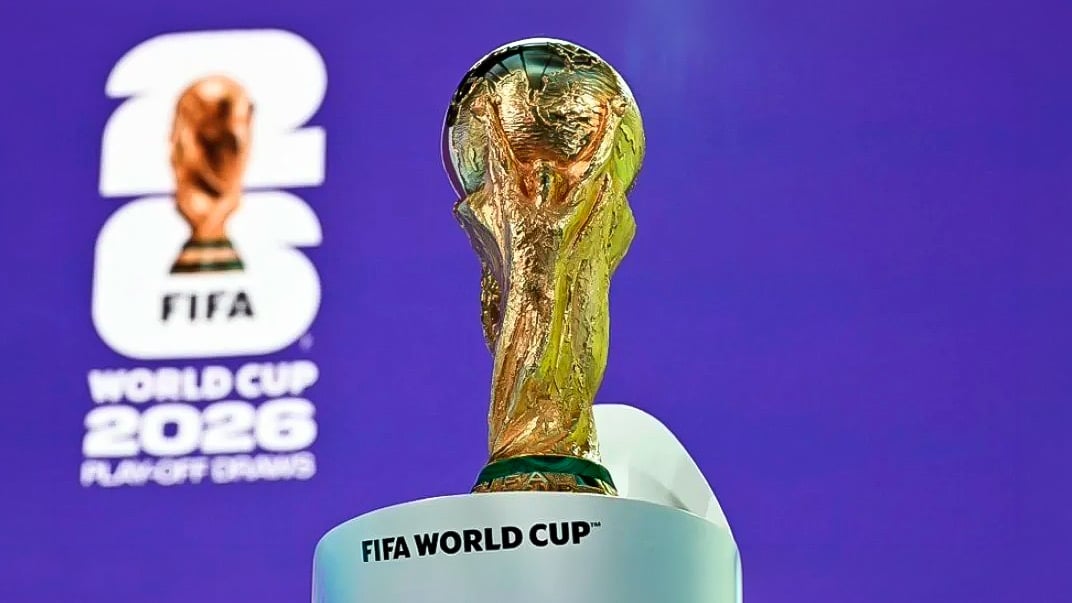
The upcoming 2026 FIFA World Cup is anticipated to shatter records as the largest betting event ever, with global wagers projected to surpass $50 billion. This surge in betting activity is expected as sportsbooks and prediction markets gear up for the expanded tournament.
The competition kicked off yesterday in Mexico City and will conclude six weeks later at MetLife Stadium in East Rutherford, New Jersey. This edition will feature 48 teams competing in a total of 104 matches—40 more than the previous 2022 tournament.
Chad Beynon, an analyst at Macquarie, estimates that global betting for the tournament could exceed $50 billion, a significant increase from over $35 billion during the last World Cup. This growth is attributed to the expanded tournament format, favorable time zones in North America, and broader access to legal sports betting in the U.S.
Macquarie predicts that the tournament could enhance operator earnings before interest, taxes, depreciation, and amortization by 2% to 5% in 2027, particularly benefiting companies with large soccer audiences and strong cross-selling capabilities.
Among the operators positioned to gain the most from this event, Flutter Entertainment, the parent company of FanDuel, stands out. Other companies like Super Group, Rush Street Interactive, Genius Sports, and Sportradar are also expected to benefit from the anticipated increase in betting activity.
Peter Jackson, CEO of Flutter Entertainment, remarked on the scale of the event, comparing it to the Super Bowl, which attracts around 200 million viewers in the U.S. He noted that during the last World Cup final in Qatar, 1.5 billion people tuned in, with a total of 5 billion viewers throughout the tournament.
Deutsche Bank forecasts that the betting handle in the U.S. alone could reach approximately $3.3 billion during the World Cup. They predict that FanDuel might generate around $1.3 billion in handle, with DraftKings following closely at $1.1 billion. BetMGM is expected to attract about $250 million, while Caesars and Penn Entertainment's theScore Bet could generate around $120 million and $83 million, respectively.
Caesars Sportsbook is expanding its betting options significantly, offering ten times more than during the 2022 World Cup, including same-game parlays, live betting, and soccer-specific wagers.
Dominic Hammond, Senior Vice President of Sports at Caesars Digital, mentioned that if the U.S. Men's National Team performs well, it could lead to a substantial increase in engagement and betting activity with each match. He also noted that the unpredictability of the tournament and the rise in parlay betting could lead to significant swings in outcomes based on a few key upsets.
Prediction markets are also looking to capitalize on the World Cup excitement. Kalshi is offering nearly 500 World Cup-related markets, while Fanatics, FanDuel, and DraftKings have launched prediction products in areas where they lack sports betting licenses.
Piper Sandler reports that Kalshi and Polymarket have recorded a combined trading volume of $7 billion, a 13% rise from the previous week. DraftKings also reported an annualized trading volume of $3.1 billion in May, marking a 34% increase from April, while annualized consumer volume rose by 24% to $1.3 billion.
However, the growth of prediction markets is accompanied by legal challenges in several U.S. states, as the Commodity Futures Trading Commission asserts its exclusive authority over event contracts.
Access to sports betting has expanded significantly since the last men's World Cup, with approximately 65% of the U.S. population now able to legally place bets, compared to around 40% in 2022.
Despite the industry's growth, concerns have been raised by responsible gambling advocates. A survey by fraud prevention firm SEON revealed that licensed betting apps remain the most popular wagering platform, chosen by 29% of respondents, while 19% preferred prediction markets. Nearly a quarter of respondents admitted to opening multiple accounts to take advantage of promotions.